

Most advice about marketing analytics gets it wrong, overlooking how over 60 percent of American e-commerce businesses struggle to turn raw data into real strategy. In a fast-moving digital market, guessing what customers want is no longer enough for long-term success. This guide breaks down what truly sets marketing analytics apart, revealing the principles and tools that help American brands translate complex numbers into smarter business decisions and stronger growth.
Table of Contents
- Defining Marketing Analytics And Its Core Principles
- Types Of Marketing Analytics In E-Commerce
- How Analytics Uncover Revenue Opportunities
- Leveraging Data Insights To Drive Aov
- Common Pitfalls And How To Avoid Them
Key Takeaways
| Point | Details |
|---|---|
| Importance of Data Quality | High-quality data collection is crucial for accurate marketing analytics insights, avoiding flawed interpretations and decisions. |
| Types of Marketing Analytics | Descriptive, diagnostic, predictive, and prescriptive analytics each serve different functions and should be used strategically based on business goals. |
| Leveraging Customer Insights | Understanding customer behavior through segmentation and predictive models helps businesses tailor marketing efforts and increase revenue. |
| Avoiding Common Pitfalls | To achieve reliable analytics, businesses must ensure data quality, select appropriate methods, and constantly review analytical practices to stay aligned with objectives. |
Defining Marketing Analytics and Its Core Principles
Marketing analytics represents a sophisticated approach to understanding customer behavior and optimizing business strategies through data-driven insights. At its core, marketing analytics transforms raw sales and customer interaction data into actionable intelligence that drives strategic decision making for e-commerce businesses. By systematically analyzing marketing data through first principles, businesses can uncover patterns and opportunities invisible to traditional analysis methods.
The fundamental principles of marketing analytics revolve around four key strategic dimensions: recognizing customer differences, tracking customer changes, understanding competitive dynamics, and managing limited resources effectively. These principles require businesses to move beyond surface-level metrics and develop a nuanced, dynamic view of their market ecosystem. Data collection becomes more than just gathering numbers - it transforms into a strategic process of mapping customer journeys, identifying behavioral triggers, and anticipating market shifts.
Modern marketing analytics leverages advanced technologies like machine learning and predictive modeling to enhance personalization and targeting strategies. By integrating multiple data sources - including website interactions, purchase history, demographic information, and behavioral patterns - e-commerce businesses can create increasingly precise customer segments. These granular insights enable hyper-targeted marketing campaigns that speak directly to individual customer preferences and needs.
Pro Tip: Analytics Precision: Invest time in cleaning and standardizing your data collection processes, as high-quality input determines the accuracy and value of your marketing analytics insights.
Types of Marketing Analytics in E-Commerce
Marketing analytics in e-commerce encompasses a diverse range of analytical approaches designed to transform raw data into strategic insights. Market basket analysis emerges as a powerful technique for understanding product purchase patterns, enabling online retailers to develop sophisticated cross-selling and upselling strategies that directly impact revenue generation. By examining the intricate relationships between products customers purchase together, businesses can create more intelligent product recommendations and optimize their inventory management.
The primary types of marketing analytics in e-commerce can be categorized into four key domains: descriptive, diagnostic, predictive, and prescriptive analytics. Descriptive analytics provides a retrospective view of past performance, tracking metrics like conversion rates, average order value, and customer acquisition costs. Diagnostic analytics delves deeper, helping businesses understand why specific marketing outcomes occurred by analyzing causal relationships. Predictive analytics leverages advanced machine learning algorithms to forecast future trends, customer behaviors, and potential market shifts. Prescriptive analytics takes these insights a step further by recommending specific actions to optimize marketing strategies and maximize business outcomes.
Advanced e-commerce analytics increasingly rely on sophisticated technologies like association rule mining and machine learning algorithms to enhance website usability and customer experience. These methods analyze complex user interaction data, revealing hidden patterns in customer browsing behavior, purchase sequences, and engagement metrics. By integrating data from multiple sources - including website interactions, mobile app usage, social media engagement, and transactional records - e-commerce businesses can create increasingly nuanced customer segments and develop hyper-personalized marketing approaches.
Here’s a summary of the four core types of marketing analytics for e-commerce:
| Analytics Type | Focus Area | Example Application | Business Value |
|---|---|---|---|
| Descriptive | Past performance metrics | Conversion rate tracking | Reveals what has happened |
| Diagnostic | Causes of past outcomes | Bounce rate analysis | Explains why results occurred |
| Predictive | Future trend forecasting | Sales prediction using modeling | Anticipates future opportunities |
| Prescriptive | Recommended strategic actions | AI-driven campaign optimization | Guides best actionable decisions |
Pro Tip: Analytics Integration: Implement a comprehensive data management strategy that consolidates information from multiple sources, ensuring your analytics provide a holistic view of customer behavior and market dynamics.
How Analytics Uncover Revenue Opportunities
Marketing analytics serves as a powerful lens for identifying hidden revenue potential within e-commerce businesses, transforming raw data into strategic growth opportunities. By systematically analyzing customer behavior, purchase patterns, and interaction metrics, businesses can uncover nuanced insights that drive significant revenue expansion. Advanced visual analytics tools now enable strategic retrospectives of performance data, allowing businesses to pinpoint exact moments and strategies that generate maximum financial impact.

Revenue opportunities typically emerge through several critical analytical approaches. Customer segmentation analytics reveal distinct purchasing behaviors, enabling targeted marketing strategies that increase conversion rates. Conversion funnel analysis helps identify and eliminate friction points in the customer journey, directly improving sales performance. Lifetime value prediction allows businesses to focus resources on high-potential customer segments, optimizing acquisition and retention strategies. Pricing optimization analytics can dynamically adjust pricing strategies based on demand, competition, and customer willingness to pay, creating more responsive and profitable pricing models.
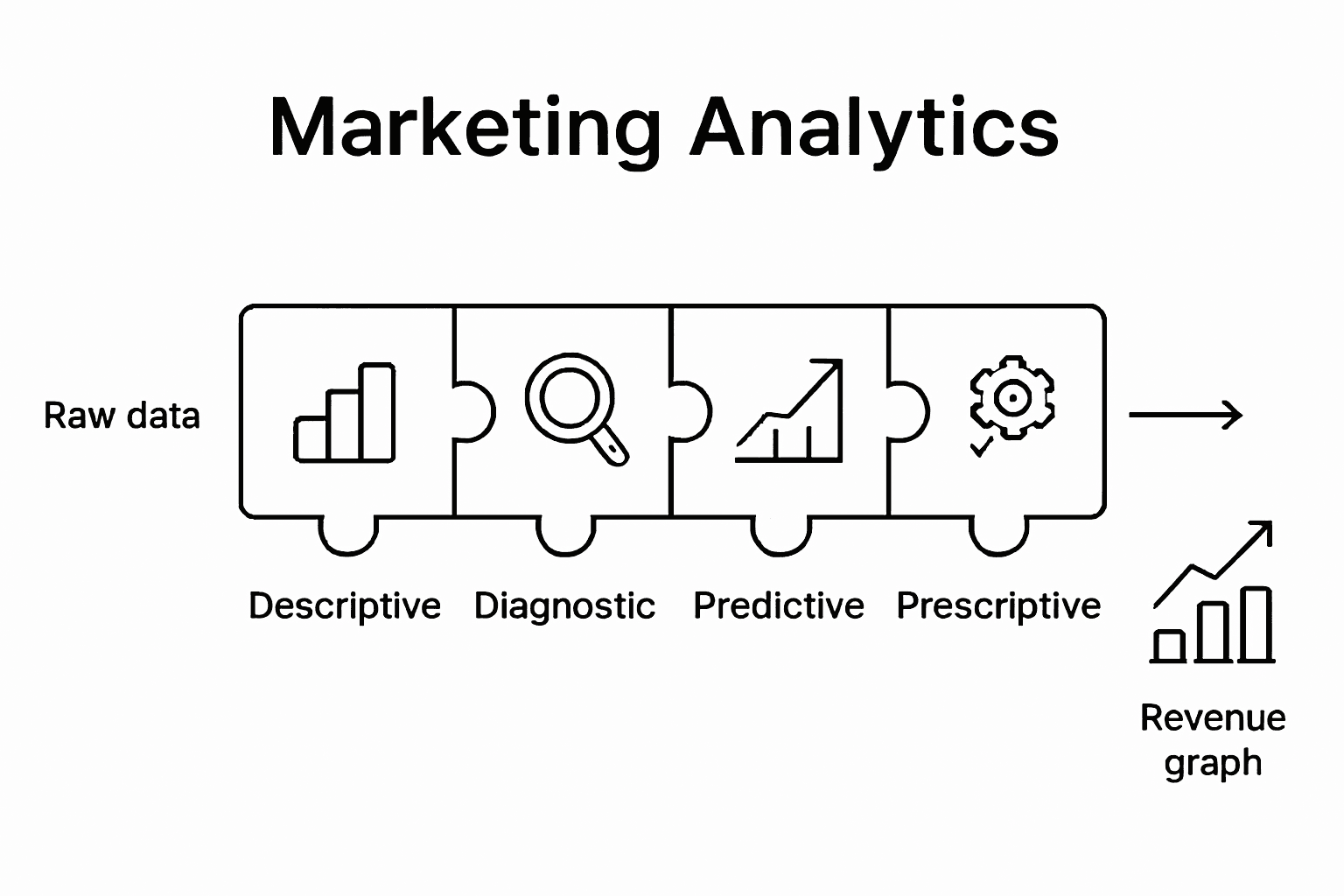
The most sophisticated revenue discovery mechanisms involve combining multiple analytical techniques to create a comprehensive understanding of business performance. Machine learning algorithms can now predict potential cross-selling opportunities by analyzing complex product relationship patterns, recommend personalized product bundles, and even forecast emerging market trends before they become apparent. These advanced techniques transform analytics from a retrospective reporting tool into a proactive revenue generation engine that continuously identifies and capitalizes on new business opportunities.
Pro Tip: Revenue Analytics Focus: Regularly rotate your analytical focus across different dimensions of your business, ensuring you do not become trapped in a single perspective of performance measurement.
Leveraging Data Insights to Drive AOV
Advanced machine learning frameworks now enable precise analysis of online shopping behaviors, transforming how e-commerce businesses strategically increase their average order value (AOV). By processing complex user interaction data, businesses can develop sophisticated strategies that encourage customers to spend more with each transaction. Understanding the intricate patterns of customer purchasing decisions becomes the key to unlocking revenue potential beyond traditional marketing approaches.
Product recommendation analytics play a crucial role in driving AOV by identifying complementary product relationships and creating intelligent cross-selling opportunities. These insights allow businesses to design personalized bundle offers, strategic product placements, and targeted promotions that naturally encourage customers to add more items to their cart. Context-enhanced learning models now provide unprecedented insights into the entire customer engagement chain, enabling marketers to craft nuanced strategies that incrementally increase purchase value without feeling manipulative or intrusive.
The most effective AOV optimization strategies integrate multiple data dimensions, including customer purchase history, browsing behavior, demographic information, and real-time interaction metrics. Machine learning algorithms can now predict not just what products a customer might want, but the precise moment and context in which they are most likely to make an additional purchase. This level of predictive intelligence transforms marketing from a reactive process to a proactive revenue generation system that anticipates and meets customer needs before they are explicitly expressed.
Pro Tip: Strategic Segmentation: Create dynamic customer segments that evolve with changing behavior patterns, allowing for continuously refined and personalized marketing approaches.
Common Pitfalls and How to Avoid Them
Comparative analysis of data analytics techniques reveals critical challenges in e-commerce marketing optimization, highlighting the complex landscape of marketing analytics. Many e-commerce businesses unknowingly undermine their analytical efforts through common mistakes that can significantly distort insights and lead to misguided strategic decisions. Understanding these pitfalls is the first step toward developing a robust, reliable analytical approach that drives genuine business growth.
Data quality issues represent the most fundamental challenge in marketing analytics. Businesses often struggle with incomplete, inconsistent, or outdated data collection methods that introduce significant bias into their analytical models. Common problems include insufficient data cleaning, lack of proper data normalization, and over-reliance on limited data sources. These issues can lead to skewed interpretations, causing businesses to make decisions based on partial or inaccurate information. Successful analytics requires a disciplined approach to data management, including regular data audits, comprehensive validation processes, and continuous refinement of data collection methodologies.
Another critical pitfall involves inappropriate analytical technique selection. Not every analytical method suits every business context, and blindly applying trending techniques without understanding their specific applicability can lead to misleading conclusions. Machine learning algorithms, predictive models, and statistical techniques each have unique strengths and limitations. Businesses must carefully match their analytical approach to their specific objectives, considering factors like data volume, complexity, and the specific questions they aim to answer. This requires a nuanced understanding of different analytical frameworks and the ability to critically evaluate which methods provide the most meaningful insights for their unique business environment.
Below is a comparison of key pitfalls in marketing analytics and how to address them:
| Pitfall | Risk to Business | Corrective Measure |
|---|---|---|
| Poor data quality | Flawed insights, strategic errors | Standardized data cleaning processes |
| Outdated or siloed data | Incomplete customer view | Unite diverse data sources |
| Improper method selection | Misleading analytics outcomes | Match technique to business question |
| Over-reliance on automation | Missed market nuances | Regularly review with expert oversight |
Pro Tip: Analytical Hygiene: Implement a rigorous data validation protocol that includes regular quality checks, cross-referencing multiple data sources, and maintaining a clear understanding of each analytical technique’s specific strengths and limitations.
Unlock Hidden Revenue with Advanced Marketing Analytics
The article highlights the challenges e-commerce businesses face in accurately analyzing customer behavior, product relationships, and maximizing Average Order Value (AOV) through sophisticated marketing analytics. If you want to overcome issues like poor data quality, ineffective segmentation, and missed cross-selling opportunities, a powerful solution is essential. APUS NEST empowers Shopify and WooCommerce store owners with AI-driven market basket analysis that transforms raw sales data into actionable insights. By identifying product pairings and customer segments, you can implement targeted cross-sell strategies that directly increase your revenue.

Take the guesswork out of your marketing analytics and start uncovering revenue opportunities today. Visit APUS NEST to upload your sales data and get your free report instantly. Learn how to optimize product placement and create personalized offers with the guidance found in our WooCommerce integration guides and educational resources. Act now to leverage data-driven growth without subscriptions or hidden fees.
Frequently Asked Questions
What is marketing analytics and how can it benefit my e-commerce business?
Marketing analytics involves the systematic analysis of sales and customer interaction data. It benefits e-commerce businesses by transforming raw data into actionable insights, enabling more informed strategic decision-making and tailoring marketing efforts to customer behavior.
What are the main types of marketing analytics used in e-commerce?
The primary types of marketing analytics in e-commerce include descriptive analytics (which tracks past performance), diagnostic analytics (which explores the reasons behind outcomes), predictive analytics (which forecasts future trends), and prescriptive analytics (which recommends specific actions for optimization).
How can marketing analytics help uncover revenue opportunities in e-commerce?
Marketing analytics helps uncover revenue opportunities by analyzing customer behavior and purchase patterns. Techniques like customer segmentation, conversion funnel analysis, and pricing optimization enable businesses to identify strategies that enhance sales performance and maximize revenue generation.
What are common pitfalls in marketing analytics to avoid?
Common pitfalls include poor data quality, outdated or siloed data, improper analytical technique selection, and over-reliance on automation. To avoid these issues, maintain stringent data management practices and ensure that the analytical methods align with specific business goals.
Recommended
- Complete Guide to Analytics in Marketing Strategy - ApusNest Blog | ApusNest
- Understanding Ecommerce Analytics: Unlocking Insights - ApusNest Blog | ApusNest
- The Essential Guide to Sales and Marketing Analytics 2025 - ApusNest Blog | ApusNest
- Understanding Retail Analytics Guide 2025 for E-Commerce Success - ApusNest Blog | ApusNest
- Role of AI in Crypto Trading: Boosting Profits and Managing Risks
