

Most companies now rely on data, yet over 60 percent of marketers admit they struggle to turn analytics into actionable strategies. Modern marketing success is no longer a guessing game but a matter of understanding exactly what works through data-driven insights. Learning how analytics shape marketing strategy helps businesses spot trends earlier, understand customers better, and make smarter decisions that drive growth.
Table of Contents
- Defining Analytics In Marketing Strategy
- Types Of Marketing Analytics Explained
- Implementing Analytics For E-Commerce Growth
- Analytics-Driven Campaigns And Use Cases
- Risks, Limitations, And Common Pitfalls
Key Takeaways
| Point | Details |
|---|---|
| Importance of Marketing Analytics | Marketing analytics is essential for decoding customer behavior and optimizing business performance through data-driven insights. |
| Types of Analytics | Businesses should leverage descriptive, diagnostic, predictive, and prescriptive analytics for comprehensive decision-making. |
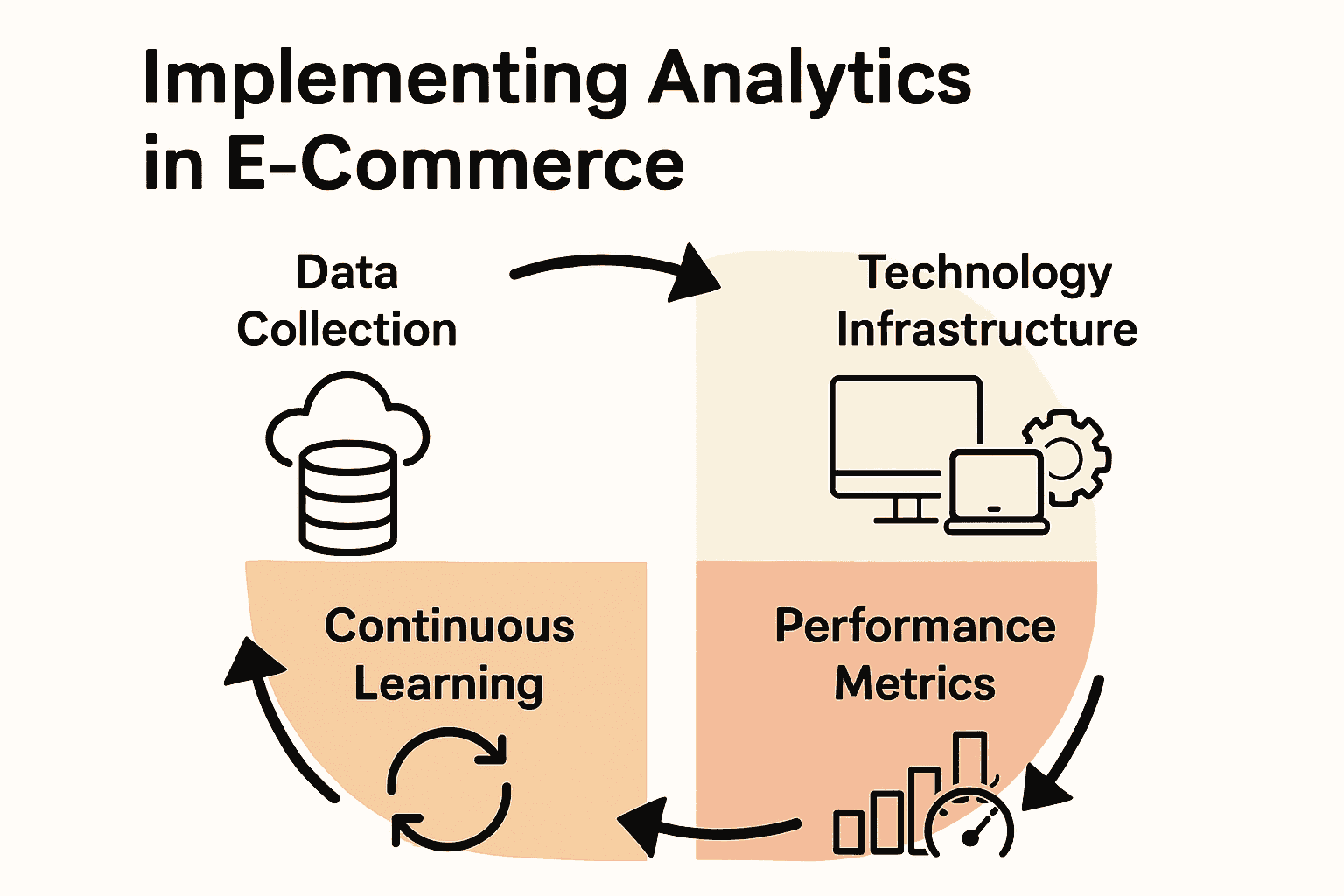
| E-Commerce Implementation | Effective analytics implementation involves data collection, technology infrastructure, performance metrics, and continuous optimization. |
| Risks and Limitations | Businesses must be aware of data quality issues, privacy concerns, and the need for ethical data management to avoid common pitfalls in analytics. |
Defining Analytics in Marketing Strategy
Analytics in marketing strategy represents a systematic approach to understanding, measuring, and optimizing business performance through data-driven insights. Marketing analytics transforms raw sales and customer interaction data into actionable intelligence that guides strategic decision-making. According to research from wjarr, digital marketing analytics now play a critical role in extracting meaningful patterns from complex datasets, particularly within the context of Big Data and artificial intelligence technologies.
At its core, marketing analytics encompasses several key dimensions that enable businesses to decode customer behavior, predict market trends, and craft precision-targeted strategies. These dimensions include:
- Descriptive Analytics: Understanding what has happened historically
- Predictive Analytics: Forecasting potential future trends and customer actions
- Prescriptive Analytics: Recommending specific actions based on data insights
For e-commerce entrepreneurs, marketing analytics serves as a powerful diagnostic and strategic tool.
 By analyzing purchasing patterns, customer segmentation, and conversion rates, businesses can uncover hidden opportunities for revenue optimization. Understanding data analysis for marketers becomes crucial in transforming complex data points into clear, actionable marketing strategies.
The most effective marketing analytics strategies go beyond mere number-crunching. They tell a story about customer preferences, identify emerging market opportunities, and provide a granular understanding of what drives consumer behavior. By leveraging advanced analytical techniques, businesses can move from reactive approaches to proactive, data-informed decision-making that directly impacts bottom-line performance.
Types of Marketing Analytics Explained
Marketing analytics has evolved into a sophisticated discipline with multiple analytical approaches that transform raw data into strategic insights. Online research reveals four primary types of marketing analytics that businesses can leverage to drive strategic decision-making: Descriptive, Diagnostic, Predictive, and Prescriptive analytics.
Let’s break down each type of marketing analytics:
- Descriptive Analytics: Provides a retrospective view of historical performance by analyzing past data. This helps businesses understand what has already happened.
- Diagnostic Analytics: Digs deeper to understand why specific outcomes occurred by examining correlations and identifying root causes of performance trends.
- Predictive Analytics: Uses statistical modeling and machine learning to forecast future trends, customer behaviors, and potential market opportunities.
- Prescriptive Analytics: Recommends specific actions based on predictive insights, offering actionable strategies to optimize business outcomes.
As Mediahawk explains, these analytical approaches work synergistically to provide a comprehensive view of marketing performance. The Essential Guide to Sales and Marketing Analytics highlights that by integrating these different types of analytics, businesses can move from reactive reporting to proactive strategic planning.
For e-commerce entrepreneurs, understanding and implementing these analytical approaches can be transformative. By systematically applying descriptive, diagnostic, predictive, and prescriptive analytics, businesses can uncover hidden revenue opportunities, optimize marketing spend, and create more targeted, effective strategies that directly impact bottom-line performance.
Implementing Analytics for E-Commerce Growth
E-commerce analytics represent a critical strategic toolkit for online businesses seeking sustainable growth and competitive advantage. Research from ArXiv highlights how advanced analytics capabilities directly influence market performance by transforming raw data into actionable marketing strategies. Understanding this transformation requires a systematic approach to implementing analytics across multiple business dimensions.
Key steps for effective analytics implementation include:
- Data Collection: Integrate comprehensive tracking across all customer touchpoints
- Technology Infrastructure: Select robust analytics platforms compatible with your e-commerce ecosystem
- Performance Metrics: Define clear, measurable key performance indicators (KPIs)
- Continuous Learning: Establish processes for ongoing data analysis and strategy refinement
The implementation process demands a holistic view of your digital ecosystem. Actionable Ecommerce Analytics Explained suggests breaking down analytics implementation into strategic phases: initial data mapping, technology selection, metric definition, and iterative optimization. This approach ensures that businesses don’t just collect data, but transform it into meaningful insights that drive tangible business outcomes.
Successful e-commerce analytics go beyond surface-level reporting. They require deep integration of descriptive, diagnostic, predictive, and prescriptive analytical techniques. By systematically analyzing customer behavior, purchase patterns, and market trends, online retailers can develop sophisticated strategies that anticipate customer needs, optimize marketing spend, and create personalized shopping experiences that differentiate them in an increasingly competitive digital marketplace.
Analytics-Driven Campaigns and Use Cases
Marketing analytics transforms raw campaign data into strategic insights that drive business growth. According to research from Zeal Journals, analytics have become critical for small and medium enterprises seeking competitive advantage in increasingly complex market landscapes. Understanding how to leverage these insights can dramatically improve campaign performance and customer engagement.
Typical use cases for analytics-driven campaigns include:
- Customer Segmentation: Identifying and targeting specific audience groups
- Personalization: Crafting tailored marketing messages based on behavioral data
- Performance Tracking: Measuring campaign effectiveness in real-time
- Predictive Modeling: Forecasting potential customer actions and campaign outcomes
Campaign Analytics Guide highlights that successful implementation requires a comprehensive approach to data collection and interpretation. By gathering insights from multiple touchpoints, businesses can develop nuanced strategies that respond dynamically to customer behaviors and market shifts.
The most powerful analytics-driven campaigns go beyond traditional metrics. They integrate advanced techniques like machine learning and predictive modeling to anticipate customer needs, optimize marketing spend, and create hyper-personalized experiences. From identifying cross-sell opportunities to predicting churn risk, these sophisticated analytical approaches enable businesses to move from reactive marketing to proactive, data-informed strategic planning that directly impacts revenue and customer loyalty.
Risks, Limitations, and Common Pitfalls
Marketing analytics presents complex challenges that can undermine business strategies if not approached thoughtfully. Research from WJARR highlights critical ethical considerations surrounding data privacy and responsible AI implementation in marketing practices, emphasizing the need for a nuanced approach to data utilization.
Common pitfalls in marketing analytics include:
- Data Quality Issues: Incomplete or inaccurate data leading to misguided decisions
- Overreliance on Algorithms: Neglecting human insight and contextual understanding
- Privacy Concerns: Potential breaches of customer data confidentiality
- Confirmation Bias: Interpreting data to support preexisting beliefs
- Technical Complexity: Implementing analytics without proper infrastructure
Understanding Data-Driven Campaign Optimization suggests that mitigating these risks requires a comprehensive strategy of continuous learning and ethical data management. Businesses must develop robust frameworks that balance technological capabilities with human oversight and strict data governance protocols.
The most significant risk lies not in the analytics themselves, but in how organizations interpret and apply their insights. Successful marketing analytics demands a holistic approach that combines advanced technological tools with critical thinking, ethical considerations, and a deep understanding of human behavior. By acknowledging potential limitations and developing sophisticated, responsible analytics strategies, businesses can transform potential pitfalls into opportunities for genuine customer understanding and meaningful engagement.
Unlock Growth with Data-Driven Marketing Analytics
Struggling to turn complex marketing data into clear strategies that boost your e-commerce sales? This article highlights how descriptive, predictive, and prescriptive analytics can reveal hidden opportunities and optimize your campaigns. Yet many store owners face challenges like data overload and lack of actionable insights, which prevent them from increasing average order value and driving customer engagement.
APUS NEST provides the exact solution you need to overcome these hurdles. Our AI-powered platform helps Shopify and WooCommerce entrepreneurs analyze sales data to discover powerful product relationships that you can leverage for smarter cross-sell and bundling strategies. Unlike tools that only report numbers, we deliver actionable insights designed to maximize revenue and enhance customer experience through advanced market basket analysis.
Ready to transform your marketing analytics into sales growth?
Start now at APUS NEST and gain access to detailed reports highlighting hidden revenue opportunities. Experience the difference with free insights or unlock full analytics, recommendations, and export options with our paid reports. Don’t let valuable data go unused—take control today and watch your e-commerce store thrive by applying the proven marketing analytics concepts discussed in the guide like predictive and prescriptive techniques.
Discover how to leverage your sales data effectively with Actionable Ecommerce Analytics Explained and learn strategies to boost revenue by reading our Understanding Data Analysis for Marketers resource. Empower your marketing decisions and grow smarter with APUS NEST.
Frequently Asked Questions
What is marketing analytics in a marketing strategy?
Marketing analytics in a marketing strategy is a systematic approach to understanding and optimizing business performance through data-driven insights, transforming raw sales and customer interaction data into actionable intelligence that guides decision-making.
What are the main types of marketing analytics?
The main types of marketing analytics are Descriptive, Diagnostic, Predictive, and Prescriptive analytics, each serving different purposes from understanding historical data to recommending specific strategies based on forecasts.
How can e-commerce businesses implement analytics for growth?
E-commerce businesses can implement analytics for growth by ensuring comprehensive data collection, establishing a solid technology infrastructure, defining clear performance metrics, and fostering continuous learning through ongoing data analysis and strategy refinement.
What are the common pitfalls in marketing analytics?
Common pitfalls in marketing analytics include data quality issues, overreliance on algorithms, privacy concerns, confirmation bias, and technical complexity. Addressing these risks requires a strategic and ethical approach to data management.
Recommended
- Advertising Analysis Guide: Strategies for Success in 2025 - ApusNest Blog | ApusNest
- Campaign Analytics Guide: Master Data-Driven Success in 2025 - ApusNest Blog | ApusNest
- The Essential Guide to Sales and Marketing Analytics 2025 - ApusNest Blog | ApusNest
- Understanding Data Analysis for Marketers Guide - ApusNest Blog | ApusNest
