

Nearly 80 percent of American online retailers face fierce competition trying to grow their digital presence. For American businesses, staying ahead means more than adding products to a website. Ecommerce growth strategies today require blending technology, marketing, and customer insights in new and smarter ways. Discover how modern approaches transform the typical online store into a dynamic force, ready to tackle shifts in the ever-changing digital marketplace.
Table of Contents
- Defining Ecommerce Growth Strategies Today
- Types of Ecommerce Growth Strategies
- How AI and Data Drive Success
- Maximizing Average Order Value Tactics
- Risks, Limitations, and Common Pitfalls
Key Takeaways
| Point | Details |
|---|---|
| Comprehensive Ecommerce Strategies | Successful growth requires a combination of mobile optimization, personalization, global expansion, and sustainable practices. |
| Utilizing AI and Data Analytics | Leveraging AI for predictive analysis and dynamic pricing is crucial for optimizing ecommerce performance. |
| Maximizing Average Order Value | Implementing product bundling and personalized recommendations can significantly increase customer spending per transaction. |
| Navigating Risks in Growth Tactics | Merchants must balance aggressive growth strategies with customer satisfaction and realistic goal-setting to avoid pitfalls. |
Defining Ecommerce Growth Strategies Today
Ecommerce growth strategies represent a comprehensive approach to systematically expanding online business performance through intentional, data-driven tactics. At their core, these strategies focus on increasing revenue, improving customer experience, and optimizing digital sales channels. Modern ecommerce growth is no longer about simple website optimization but creating sophisticated, integrated approaches that leverage technology and consumer insights.
Today’s most effective strategies encompass multiple dimensions, including omnichannel retailing and personalized customer experiences. Successful online retailers recognize that growth requires a holistic approach that combines technological innovation, strategic marketing, and deep customer understanding. These strategies might include mobile commerce optimization, advanced analytics integration, targeted marketing campaigns, and seamless cross-platform purchasing experiences.
Key components of contemporary ecommerce growth strategies include:
- Mobile Commerce Optimization: Ensuring smooth, responsive experiences across smartphone and tablet platforms
- Personalization Technologies: Using AI and machine learning to create individualized shopping experiences
- Global Market Expansion: Developing strategies to reach international customer segments
- Sustainable Practice Integration: Implementing environmentally conscious business models
Technological innovation continues to drive ecommerce growth, with emerging trends like virtual reality integration and blockchain technologies reshaping traditional online retail paradigms. Successful merchants must remain adaptable, continuously analyzing performance metrics and experimenting with cutting-edge approaches to stay competitive in an increasingly dynamic digital marketplace.
Types of Ecommerce Growth Strategies
Ecommerce growth strategies represent structured approaches for expanding online business potential across different dimensions. The Ansoff Matrix provides a foundational framework for understanding these strategic approaches, outlining four primary pathways for business expansion that apply directly to digital commerce environments. Each strategy offers unique opportunities and challenges for online retailers seeking sustainable growth.
The four core ecommerce growth strategies include:
- Market Penetration: Deepening market share within existing product and market segments
- Increasing customer loyalty
- Enhancing marketing effectiveness
- Improving product offerings
- Product Development: Creating new products for existing customer bases
- Introducing innovative product lines
- Expanding product categories
- Leveraging existing customer relationships
- Market Development: Entering new market segments or geographic regions
- Targeting different customer demographics
- Exploring international online markets
- Adapting products for new audience needs
- Diversification Strategy: Introducing new products in entirely new markets
- Highest risk and potential reward
- Requires significant research and investment
- Enables radical business transformation
Successful ecommerce merchants understand that these strategies are not mutually exclusive. Sophisticated growth approaches often involve a dynamic combination of these strategies, carefully tailored to specific business goals, market conditions, and competitive landscapes. Continuous market research, data analysis, and adaptive strategic planning are essential for effectively implementing these growth frameworks in an increasingly complex digital marketplace.

How AI and Data Drive Success
Artificial Intelligence and advanced data analytics have revolutionized ecommerce growth strategies, transforming how online businesses make critical decisions and optimize performance. Online controlled experiments and A/B testing have become fundamental tools for data-driven decision-making, enabling merchants to systematically assess the impact of innovations and refine their digital strategies with unprecedented precision.
Key mechanisms through which AI and data drive ecommerce success include:
-
Predictive Customer Behavior Analysis
- Forecasting purchase patterns
- Identifying potential churn risks
- Personalizing product recommendations
-
Dynamic Pricing Optimization
- Real-time price adjustments
- Competitive market positioning
- Maximizing profit margins
-
Customer Experience Enhancement
- Intelligent chatbot interactions
- Personalized shopping journeys
- Automated customer support
Web usage mining techniques have emerged as powerful methods for extracting sophisticated business intelligence, allowing online retailers to transform raw website interaction data into actionable strategic insights. These advanced analytics go beyond traditional metrics, providing deep understanding of customer navigation patterns, engagement triggers, and conversion pathways.
Successful implementation of AI-driven strategies requires a holistic approach that combines technological sophistication with strategic vision. Merchants must invest in robust data infrastructure, cultivate advanced analytical skills, and maintain an experimental mindset that embraces continuous learning and optimization. The future of ecommerce belongs to those who can most effectively leverage data as a strategic asset, turning complex information into competitive advantage.
Maximizing Average Order Value Tactics
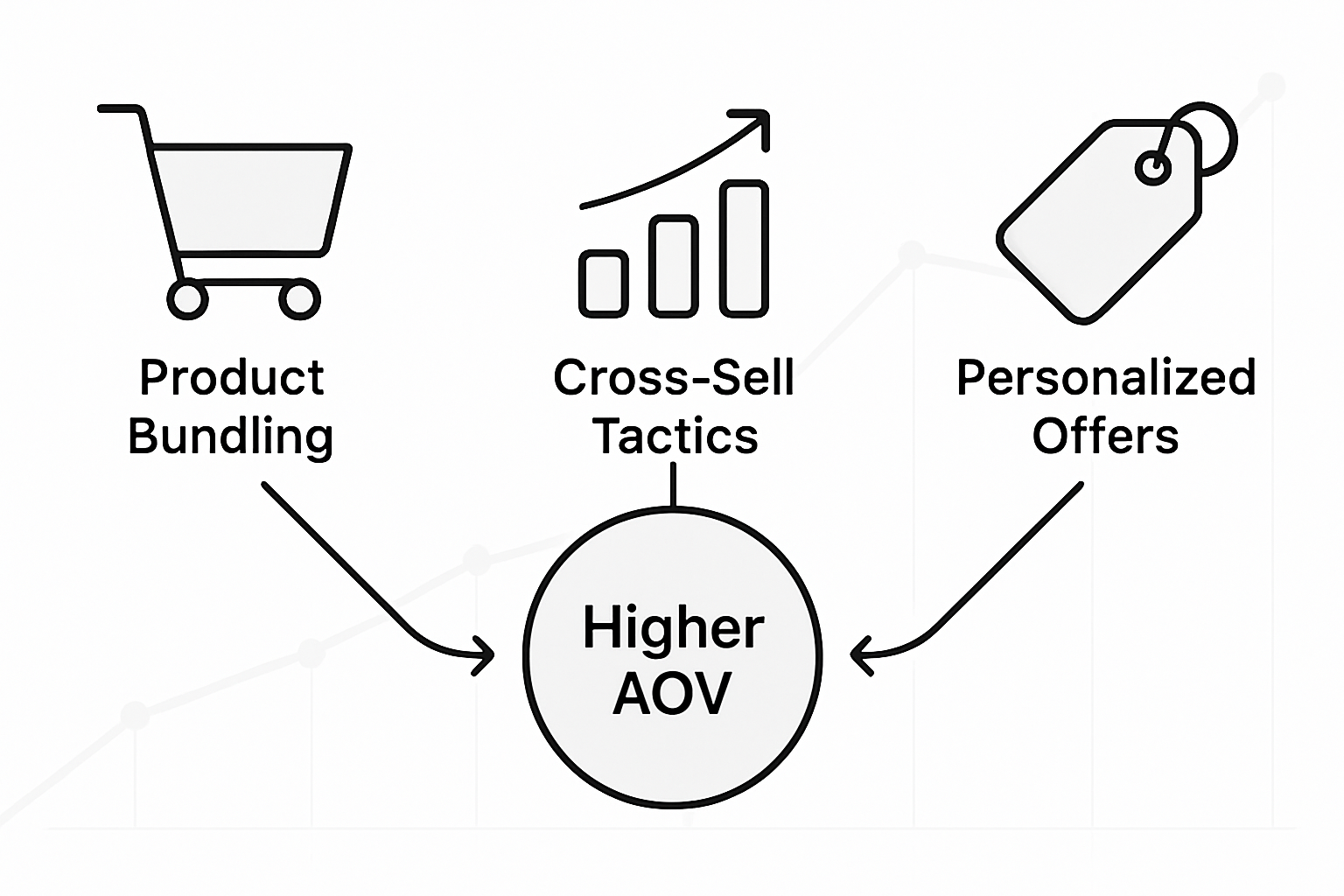
Maximizing average order value (AOV) represents a critical strategy for ecommerce merchants seeking sustainable revenue growth. By implementing targeted tactics that encourage customers to spend more during each transaction, online retailers can significantly boost their overall profitability without necessarily increasing customer acquisition costs.
Core strategies for increasing average order value include:
- Strategic Product Bundling
- Creating complementary product packages
- Offering volume discounts
- Designing tiered pricing structures
- Intelligent Cross-Selling
- Recommending related items
- Suggesting product upgrades
- Highlighting complementary accessories
- Psychological Pricing Techniques
- Implementing threshold-based shipping discounts
- Using price anchoring strategies
- Creating time-limited promotional offers
- Personalized Recommendations
- Leveraging customer purchase history
- Using AI-driven suggestion algorithms
- Tailoring product recommendations
The omnichannel approach can substantially enhance average order value by creating seamless, integrated shopping experiences that encourage customers to explore and purchase across multiple platforms. This strategy transforms traditional linear purchasing paths into dynamic, interconnected customer journeys that maximize engagement and spending potential.
Successful AOV optimization requires continuous experimentation, data analysis, and customer-centric design. Merchants must view each interaction as an opportunity to provide genuine value, balancing strategic upselling with authentic customer needs. The most effective tactics feel less like sales techniques and more like personalized shopping experiences that genuinely help customers find products that enhance their lives.
Risks, Limitations, and Common Pitfalls
Ecommerce growth strategies, while promising significant revenue potential, are not without substantial challenges and inherent risks that merchants must carefully navigate. Growth hacking approaches can often lead to unsustainable practices that prioritize short-term gains over long-term stability, creating potential strategic vulnerabilities for online businesses.
Key risks and limitations in ecommerce growth strategies include:
- Strategic Overextension
- Attempting too many growth tactics simultaneously
- Spreading resources too thin
- Losing focus on core business objectives
- Data Interpretation Challenges
- Misreading analytics signals
- Overreacting to incomplete data sets
- Failing to distinguish correlation from causation
- Technology Implementation Risks
- Selecting inappropriate technological solutions
- Inadequate integration of new tools
- High initial investment with uncertain returns
- Customer Experience Disruption
- Aggressive upselling techniques
- Overwhelming customers with recommendations
- Reducing perceived value through excessive marketing
Virtual store research demonstrates the complexities of accurately modeling consumer behavior, revealing that digital strategies can sometimes fail to capture the nuanced decision-making processes of real-world shopping experiences. This disconnect highlights the critical need for continuous testing, adaptive strategies, and genuine customer-centric approaches.
Successful ecommerce growth requires a balanced approach that acknowledges potential limitations while remaining agile and responsive. Merchants must develop robust risk mitigation strategies, maintain realistic expectations, and create flexible frameworks that can adapt to changing market dynamics. The most resilient online businesses view these potential pitfalls not as obstacles, but as opportunities for strategic refinement and deeper customer understanding.
Unlock Hidden Ecommerce Growth Opportunities with APUS NEST
The article highlights the importance of maximizing average order value and using data-driven strategies like product bundling and intelligent cross-selling to drive ecommerce growth. If you are facing challenges in uncovering product relationships or struggling to implement effective upselling tactics, APUS NEST offers a powerful solution specially designed to address these pain points. By leveraging advanced AI-powered market basket analysis, APUS NEST helps Shopify and WooCommerce store owners identify complementary product pairings and actionable growth insights that translate into higher revenue.
Get clear, actionable reports that reveal your best product bundles and increase cross-sell success without guesswork. Start with a free analysis and explore how seamless data integration can transform your ecommerce performance today.
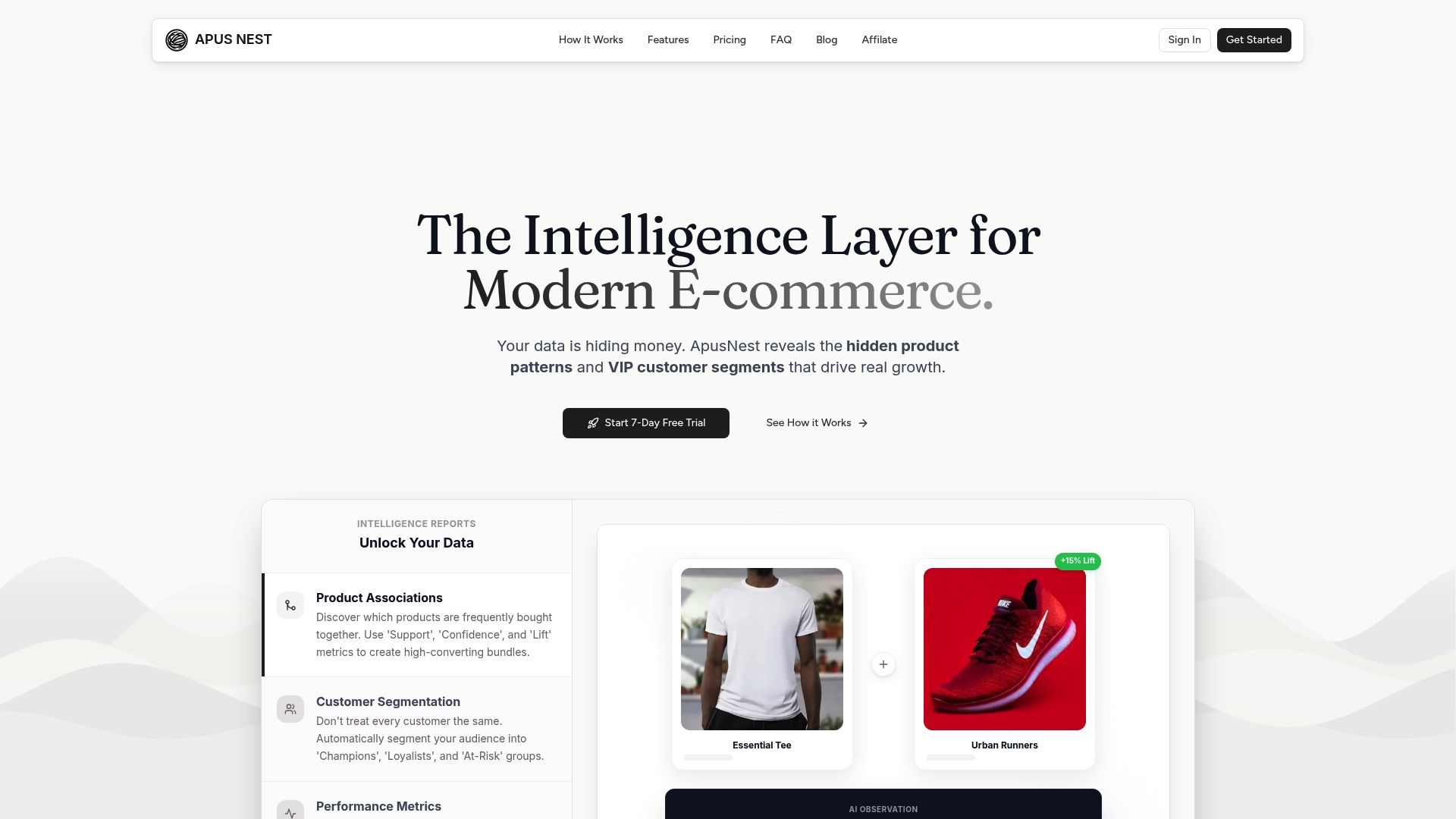
Discover the full potential of your online store at APUS NEST. Take control of your growth strategy by leveraging personalized recommendations and data-driven tactics that align perfectly with the ecommerce growth strategies explained in this article. Don’t wait to unlock hidden revenue opportunities that bring lasting success.
Explore how our platform’s insights connect directly to increasing average order value, product bundling, and personalized upselling by visiting APUS NEST. Your next growth breakthrough is just a click away.
Frequently Asked Questions
What are the main components of effective ecommerce growth strategies?
The main components include mobile commerce optimization, personalization technologies, global market expansion, and the integration of sustainable practices.
How can ecommerce businesses leverage AI to improve growth?
Ecommerce businesses can use AI for predictive customer behavior analysis, dynamic pricing optimization, and enhancing customer experiences through chatbots and personalized recommendations.
What are some tactics to maximize average order value (AOV) in ecommerce?
To maximize AOV, ecommerce retailers can implement strategies such as product bundling, intelligent cross-selling, psychological pricing techniques, and personalized recommendations based on customer purchase history.
What are the risks associated with ecommerce growth strategies?
Risks include strategic overextension, data interpretation challenges, technology implementation risks, and potential disruptions to customer experience due to aggressive upselling techniques.
Recommended
- Understanding Ecommerce Growth Strategies Guide - ApusNest Blog | ApusNest
- 7 Effective Ways to Maximize Revenue in E-commerce - ApusNest Blog | ApusNest
- Ecommerce Insights Explained: Driving Store Growth - ApusNest Blog | ApusNest
- Actionable Ecommerce Analytics Explained: Boost Revenue - ApusNest Blog | ApusNest
