

Agentic commerce protocols are shaking up everything we think we know about online shopping. Instead of constant human oversight, businesses are now using smart agents that can actually make decisions and negotiate deals with almost no help. That sounds futuristic, but it’s already here and driving real change—companies embracing autonomous technologies have slashed operational costs by up to 30 percent. Most people obsess over flashy websites or quicker checkout flows. The biggest breakthrough is this invisible army of AI agents quietly transforming how digital transactions get done.
Table of Contents
- Defining Agentic Commerce Protocol In E-commerce
- The Importance Of Agentic Commerce In Retail
- How Agentic Commerce Protocol Works
- Key Concepts Behind Agentic Commerce Protocol
- Real-World Applications Of Agentic Commerce Protocol
Quick Summary
| Takeaway | Explanation |
|---|---|
| Autonomous agents enhance transaction efficiency. | Intelligent agents manage complex transactions, reducing the need for human oversight, leading to streamlined operations. |
| Real-time decision-making improves customer experiences. | The protocol allows businesses to optimize interactions based on immediate data, creating personalized shopping experiences for consumers. |
| Reduced operational costs are achievable. | Companies can lower costs by implementing agentic commerce, potentially reducing operational expenses by up to 30% while enhancing engagement metrics. |
| Integrated systems ensure seamless commerce. | The protocol’s architecture facilitates communication across platforms, ensuring secure and effective transaction execution with minimal friction. |
| Continuous learning optimizes future transactions. | Each interaction is an opportunity for agents to improve, making commercial ecosystems increasingly intelligent and adaptive over time. |
Defining Agentic Commerce Protocol in E-commerce
The agentic commerce protocol represents an innovative approach to digital transactions that fundamentally transforms how online businesses interact with customers and manage complex commercial interactions. At its core, this protocol leverages autonomous intelligent agents that can negotiate, execute, and optimize transactions with minimal human intervention.
Core Principles of Autonomous Transaction Management
Under the agentic commerce protocol, intelligent software agents act as sophisticated digital intermediaries capable of making complex decisions. According to the Global Supply Chain Standards Organization, these agents utilize advanced algorithms to analyze transaction parameters, evaluate market conditions, and execute trades based on predefined rules and machine learning insights.
Key characteristics of these autonomous agents include:
- Ability to interpret complex transaction requirements
- Real-time decision making based on multiple variables
- Adaptive learning from previous transaction outcomes
Technical Infrastructure and Operational Mechanics
The technological backbone of the agentic commerce protocol involves integrating multiple systems and data streams. These agents can seamlessly communicate across different platforms, utilizing standardized communication protocols to ensure secure and efficient transaction processing.
By implementing machine learning and predictive analytics, these systems can anticipate market trends, optimize pricing strategies, and recommend personalized product bundles. Check out our comprehensive guide on e-commerce strategies to understand how such advanced protocols can transform online retail operations.
Unlike traditional e-commerce models that require constant human monitoring, the agentic commerce protocol enables businesses to automate complex transactional workflows, reducing operational overhead and minimizing human error.
Below is a table highlighting the key characteristics of autonomous agents as described in the context of the agentic commerce protocol.
| Characteristic | Description |
|---|---|
| Complex Requirement Interpretation | Agents can process and understand detailed transaction needs. |
| Real-Time Decision Making | Agents evaluate and act on multiple variables instantly. |
| Adaptive Learning | Agents learn from transaction outcomes to improve future actions. |
| Minimal Human Oversight | Agents handle most tasks without ongoing direct intervention. |
| Negotiation Capabilities | Agents can autonomously negotiate terms within set parameters. |
| Data-Driven Execution | Agents rely on real-time data and analytics to guide their actions. |
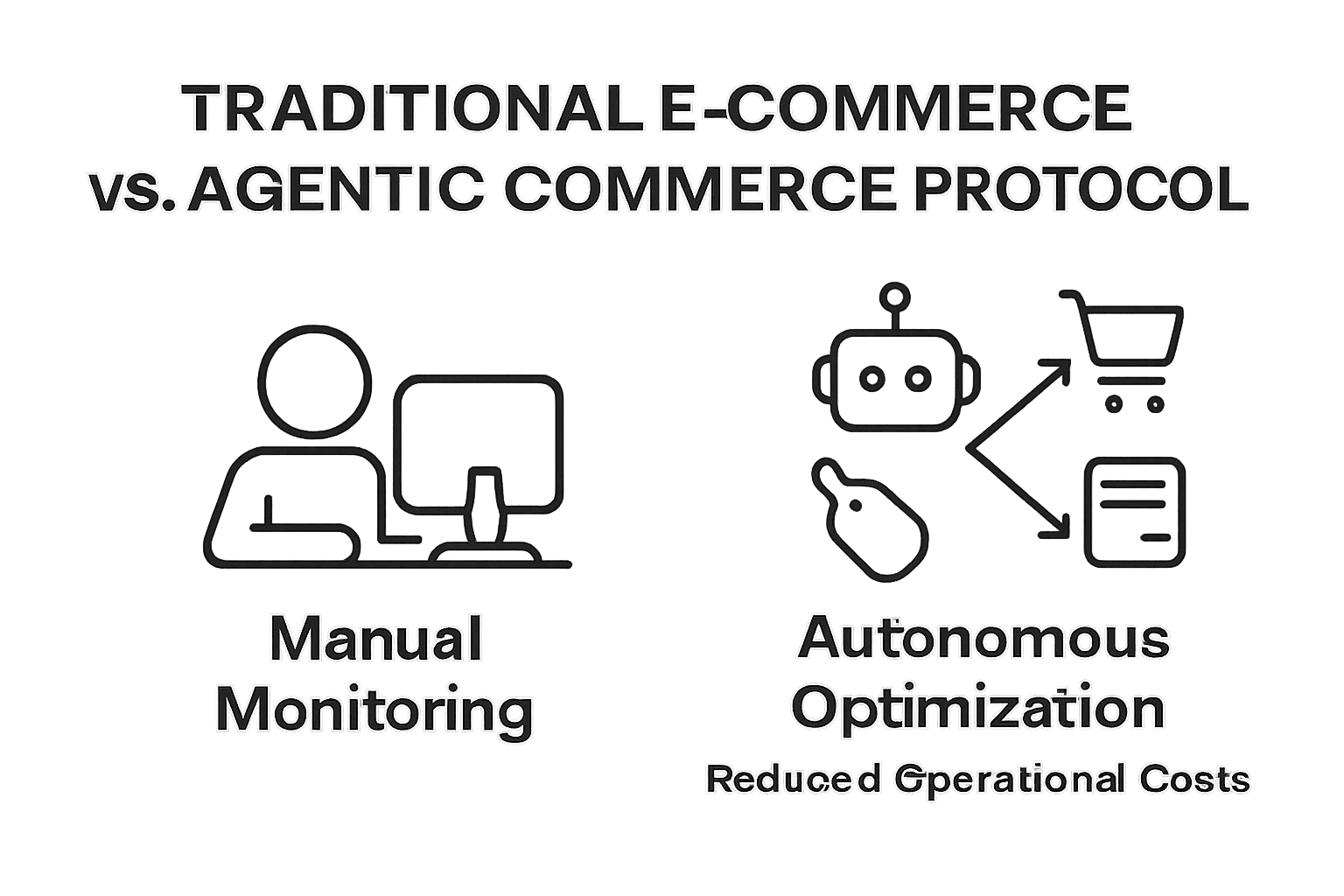 This approach represents a significant leap forward in digital commerce, offering unprecedented levels of efficiency and intelligent decision-making.
The Importance of Agentic Commerce in Retail
Agentic commerce represents a transformative approach to retail that goes beyond traditional transactional models, enabling businesses to create more intelligent, responsive, and personalized shopping experiences. By leveraging advanced artificial intelligence and autonomous systems, retailers can fundamentally reimagine how they interact with customers and manage complex commercial processes.
Strategic Competitive Advantages
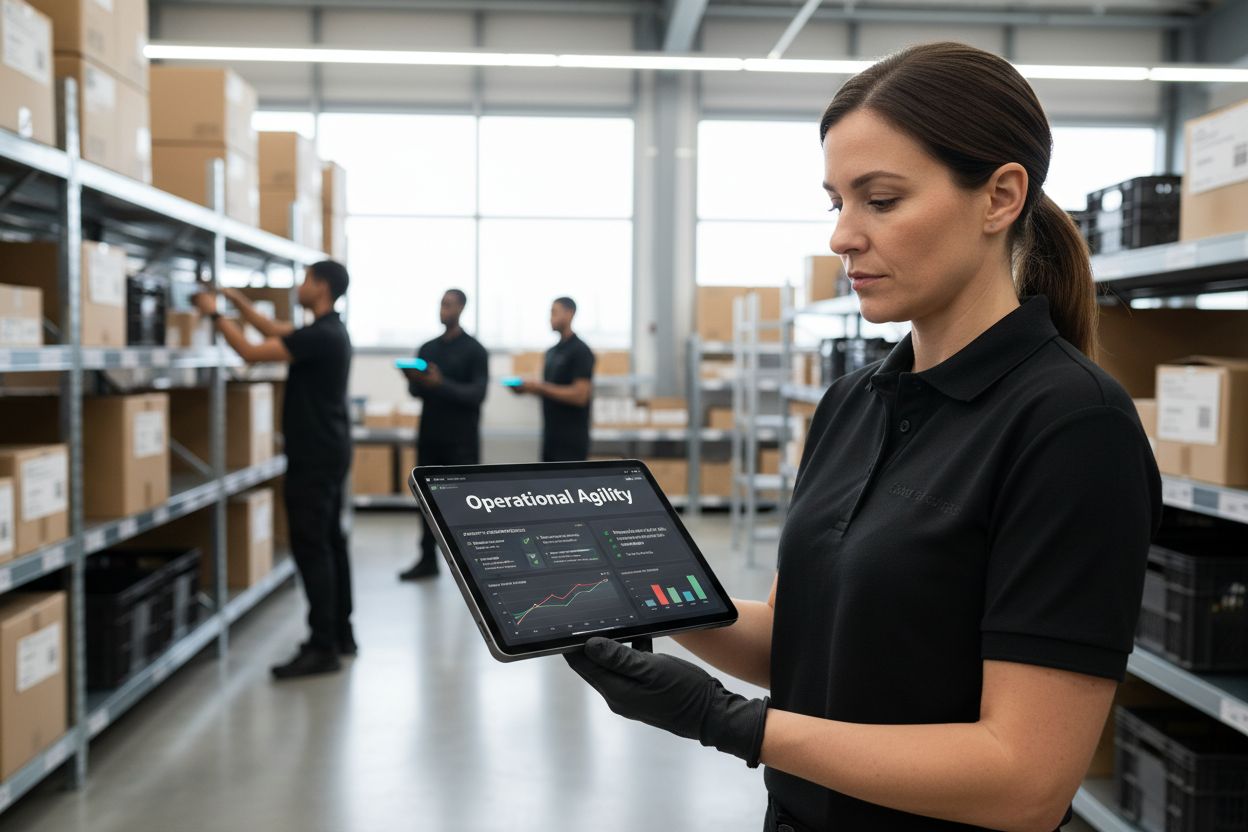
The strategic importance of agentic commerce lies in its ability to provide unprecedented operational agility. According to McKinsey’s digital transformation research, businesses that adopt autonomous technologies can reduce operational costs by up to 30% while simultaneously improving customer engagement metrics.
Key strategic benefits include:
- Enhanced real-time decision making
- Predictive inventory management
- Personalized customer interaction optimization
Economic and Operational Transformation
Retail environments are increasingly complex, with customers demanding seamless, instantaneous experiences across multiple channels. Agentic commerce enables businesses to meet these expectations by creating intelligent systems that can dynamically adapt to changing market conditions. Learn more about AI integration strategies to understand how these technologies are reshaping retail landscapes.
By implementing autonomous agents, retailers can create sophisticated ecosystems that continuously learn, predict customer behaviors, and make nuanced decisions without constant human oversight.
This table compares traditional e-commerce and agentic commerce protocol approaches, making it easier to see how agentic commerce transforms transaction management in retail.
| Aspect | Traditional E-commerce | Agentic Commerce Protocol |
|---|---|---|
| Transaction Management | Manual oversight required | Autonomous agents manage transactions |
| Decision Making | Primarily human-driven | Real-time, data-driven by intelligent agents |
| Personalization | Limited, rule-based | Highly adaptive and personalized |
| Operational Costs | Higher due to labor and errors | Reduced by up to 30% through automation |
| Process Adaptability | Slow, manual adjustments | Rapid, continuous learning and optimization |
| This approach not only reduces operational friction but also enables more sophisticated pricing strategies, inventory management, and customer segmentation. |
How Agentic Commerce Protocol Works
The agentic commerce protocol operates through a sophisticated ecosystem of interconnected intelligent systems that transform traditional transactional processes into dynamic, adaptive workflows. These autonomous systems leverage advanced machine learning algorithms and predictive analytics to create intelligent transaction management environments.
Technical Architecture and Computational Dynamics
At the core of the agentic commerce protocol are intelligent agent frameworks that function as autonomous decision-making entities. According to MIT Technology Review’s research on AI systems, these agents utilize complex neural networks to process multiple data streams simultaneously, enabling near-instantaneous decision-making capabilities.
Key computational components include:
- Machine learning models for pattern recognition
- Real-time data processing engines
- Adaptive decision-making algorithms
Operational Workflow and Transaction Execution
The protocol facilitates transactions through a multi-stage process where autonomous agents analyze, negotiate, and execute commercial interactions with minimal human intervention. These agents continuously collect and interpret market data, customer preferences, and transactional parameters to optimize each interaction.
By creating intelligent communication channels between different systems, the agentic commerce protocol enables seamless integration across various platforms. Explore our comprehensive e-commerce advertising guide to understand how advanced technological frameworks are revolutionizing digital commerce strategies.
The entire system operates on a principle of continuous learning, where each transaction becomes an opportunity to refine and improve future interactions.
This approach transforms traditional transactional models into intelligent, adaptive commercial ecosystems that can anticipate market changes and customer needs with unprecedented accuracy.
Key Concepts Behind Agentic Commerce Protocol
The agentic commerce protocol is underpinned by a complex set of philosophical and technological principles that reimagine how digital transactions and interactions can be orchestrated. These foundational concepts represent a paradigm shift from traditional transactional models toward more intelligent, autonomous, and adaptive commercial ecosystems.
Autonomous Decision Making
According to academic research from MIT, the core principle of agentic commerce is radical autonomy—where intelligent agents are empowered to make independent decisions based on sophisticated contextual analysis. These agents operate with predefined objectives but possess the flexibility to adapt strategies in real-time, creating a dynamic and responsive commercial environment.
Key characteristics of autonomous decision making include:
- Self-directed goal pursuit
- Contextual learning capabilities
- Minimal human intervention requirements
Intelligent Interaction Frameworks
Beyond simple automation, agentic commerce protocols establish sophisticated interaction frameworks that enable complex negotiations and transactions. These frameworks leverage advanced machine learning models to interpret nuanced market signals, customer preferences, and systemic constraints, transforming traditional transactional processes into intelligent dialogues.
Check out our comprehensive insights on retail analytics to explore how these intelligent interaction frameworks are revolutionizing commercial strategies.
The protocol fundamentally reimagines commercial interactions as collaborative, adaptive processes where intelligent agents continuously refine their understanding, optimize strategies, and create more personalized, efficient transaction experiences. By embedding advanced computational intelligence into commercial workflows, businesses can transcend traditional operational limitations and create more responsive, intelligent economic ecosystems.
Real-World Applications of Agentic Commerce Protocol
The agentic commerce protocol transitions from theoretical framework to practical implementation across diverse industries, demonstrating its transformative potential in solving complex commercial challenges. These real-world applications showcase how intelligent autonomous systems can revolutionize traditional business processes and create more dynamic, responsive commercial ecosystems.
Retail and E-commerce Transformation
According to the European Commission’s digital trade research, agentic commerce protocols are dramatically reshaping cross-border digital transactions. Intelligent agents now facilitate instantaneous multi-currency settlements, automated compliance verification, and real-time language translation, effectively eliminating traditional barriers to international trade.
Key retail applications include:
- Automated inventory optimization
- Dynamic pricing strategies
- Personalized product recommendation systems
Supply Chain and Logistics Innovations
In supply chain management, agentic commerce protocols enable unprecedented levels of operational intelligence. These systems can predict potential disruptions, automatically reroute shipments, negotiate with suppliers in real-time, and optimize logistics networks with minimal human intervention.
Discover advanced market basket analytics strategies to understand how intelligent systems are transforming product management and distribution.
The protocol represents more than technological innovation—it signifies a fundamental reimagining of commercial interactions. By embedding advanced computational intelligence into business workflows, organizations can create more adaptive, efficient, and intelligent economic systems that respond dynamically to complex market conditions.
Unlock the Full Value of Agentic Commerce with Data-Driven Insights
Are you struggling to turn advanced agentic commerce protocols into real revenue growth? If you have been inspired by this article’s vision of autonomous agents and smarter, adaptive e-commerce strategies, but still face uncertainty about where profits are hiding in your own store, it is time for a practical solution. E-commerce success today demands more than just deciding what to automate. You need targeted, intelligent product pairing and actionable cross-sell tactics that fit seamlessly with the promise of agentic commerce.

Experience how APUS NEST translates complex concepts like adaptive decision-making and market basket analysis into step-by-step opportunities for your store. Start with a free report or dive deeper for full analytics powers and export features. Act now to see the exact product relationships that shape your customers’ choices. Visit our main platform or see our guide on e-commerce strategies to turn agentic commerce theory into measurable sales improvement.
Frequently Asked Questions
What is the agentic commerce protocol?
The agentic commerce protocol is an innovative approach in e-commerce that utilizes autonomous intelligent agents to negotiate, execute, and optimize transactions with minimal human involvement. It aims to enhance efficiency in the digital transaction process.
How does the agentic commerce protocol improve decision-making for businesses?
This protocol enables businesses to harness real-time decision-making capabilities by analyzing various data streams and market conditions through intelligent agents, allowing for more adaptive and informed commercial interactions.
What technological elements support the agentic commerce protocol?
The protocol relies on a sophisticated architecture, including intelligent agent frameworks, machine learning models, and real-time data processing engines. These elements work together to streamline transaction management and optimize operational efficiencies.
What are the practical applications of the agentic commerce protocol in retail?
In retail, the agentic commerce protocol can automate inventory optimization, implement dynamic pricing strategies, and enhance personalized product recommendations, all contributing to a more responsive and efficient e-commerce environment.
Recommended
- E Commerce Advertising Guide: Strategies for Success in 2025 - ApusNest Blog | ApusNest
- Understanding Ecommerce Conversion: Boosting Online Sales - ApusNest Blog | ApusNest
- Understanding Ecommerce Analytics: Unlocking Insights - ApusNest Blog | ApusNest
- 10 Ecommerce Tips to Elevate Your Online Store in 2025 - ApusNest Blog | ApusNest
- Understanding the Role of AI in Ecommerce
