

Did you know that e-commerce businesses using data-driven marketing see up to 20 percent higher profitability compared to those that do not? Clear goals, smart segmentation, and actionable analytics now separate successful brands from the rest. When your campaigns speak to the right people at the right time and every move is tracked and refined, your marketing can deliver real business growth with far less guesswork.
Table of Contents
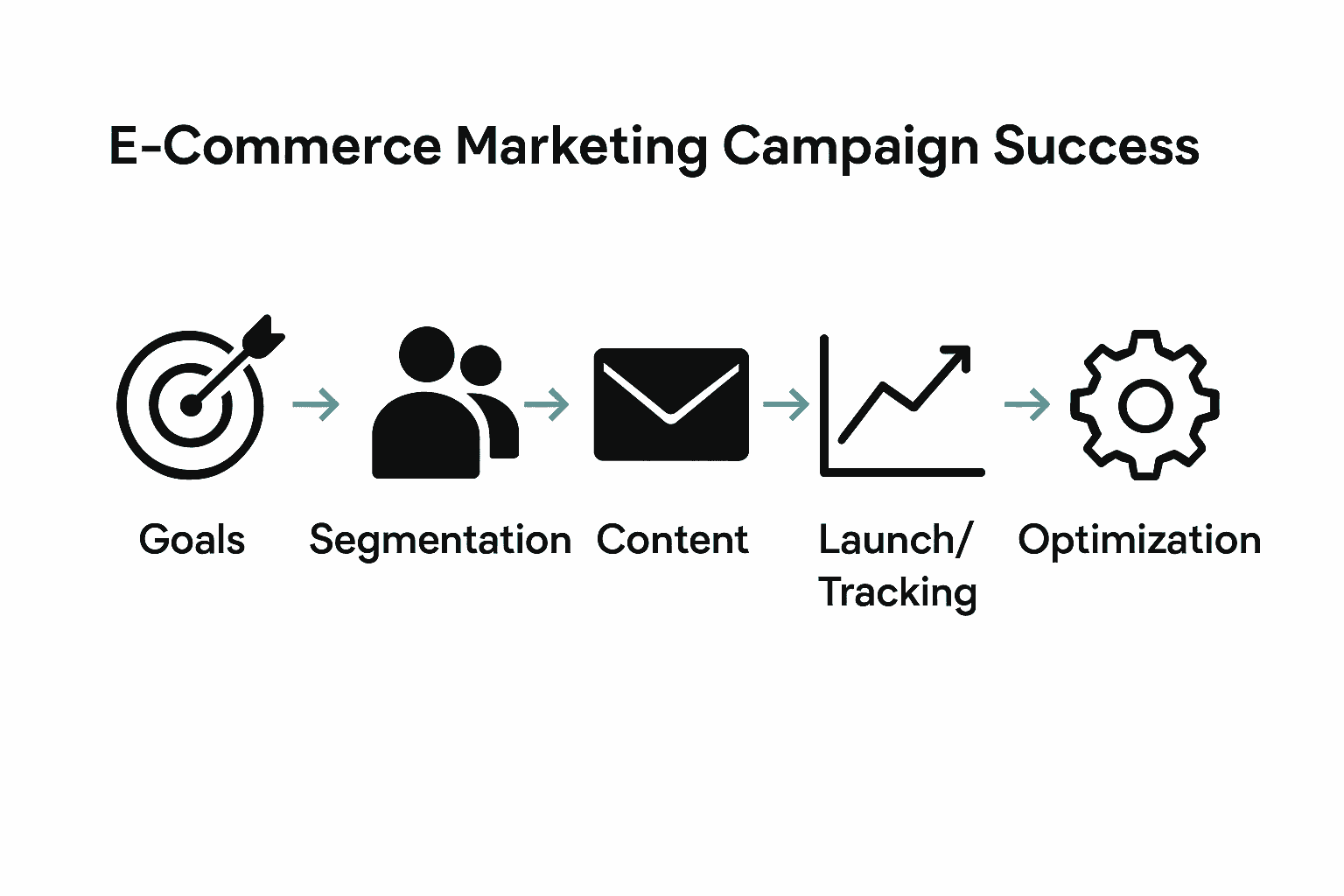
- Step 1: Define Campaign Goals With Data Insights
- Step 2: Segment Audiences Using Sales Analysis
- Step 3: Craft Personalized Campaign Content
- Step 4: Launch And Track Campaign Performance
- Step 5: Optimize Results With Actionable Analytics
Quick Summary
| Key Point | Explanation |
|---|---|
| 1. Define precise campaign goals | Establish specific, measurable objectives that align with data insights for significant growth. |
| 2. Segment audiences effectively | Create targeted audience groups based on behaviors and preferences to enhance marketing relevance. |
| 3. Craft personalized content | Develop tailored messaging that resonates with distinct audience segments to improve engagement. |
| 4. Implement robust tracking methods | Set up analytics to monitor campaign performance and adjust strategies based on real-time data. |
| 5. Use analytics for optimization | Continuously analyze campaign data to inform improvements and drive better results in future efforts. |
Step 1: Define campaign goals with data insights
Successful e-commerce marketing campaigns start with crystal clear goals backed by intelligent data analysis. In this step, you will transform raw sales information into strategic objectives that drive meaningful business growth.
According to the Digital Marketing Institute, setting precise goals is crucial before launching any marketing initiative. Your campaign objectives might include generating leads, increasing brand visibility, acquiring new customers, or improving customer retention. Each goal requires specific data insights and measurement strategies.
To define effective goals, start by analyzing your current performance metrics. Review sales data, conversion rates, average order value, and customer engagement levels. Kortx emphasizes that utilizing data insights allows marketers to optimize campaigns by identifying top-performing strategies and intelligently reallocating resources.
Here are practical steps to transform data into actionable campaign goals:
- Examine your historical sales performance
- Identify top-performing product categories
- Calculate your current conversion rates
- Understand customer purchase behavior patterns
- Set specific numeric targets for improvement
A strategic approach means moving beyond generic objectives. Instead of saying “increase sales,” specify “boost average order value by 15% through targeted cross-sell recommendations.” This precision transforms abstract goals into measurable, achievable targets.
Warning: Never set goals in isolation. Your objectives must connect directly to your broader business strategy and reflect your current market position and capabilities.
The next step will involve selecting precise metrics and establishing a tracking framework to monitor your campaign’s progress and effectiveness.
Step 2: Segment audiences using sales analysis
After defining your campaign goals, the next critical step is breaking down your customer base into meaningful segments that reveal precise targeting opportunities. This strategic approach transforms generic marketing into laser focused communication that resonates with specific customer groups.
According to Business University of Queensland, successful segmentation involves identifying ideal market segments using criteria like size and accessibility. By collecting empirical data, you ensure marketing efforts are directed toward the most promising audience groups.
Behavioral segmentation emerges as a powerful technique for understanding customer nuances. Garadesud highlights that tracking user interactions such as purchase history and content engagement can dramatically enhance marketing effectiveness by tailoring strategies to specific audience behaviors.
To effectively segment your audience, consider these strategic approaches:
- Analyze purchase frequency
- Review average order value per customer group
- Examine product category preferences
- Study customer lifetime value
- Identify repeat versus one time buyers
When segmenting, focus on creating actionable groups. For example, instead of broad categories like “young professionals,” create segments like “tech savvy professionals who purchase premium accessories quarterly.”
Pro Tip: The more specific your segmentation, the more personalized your marketing can become.
For deeper insights into audience segmentation strategies, check out our customer segmentation examples.
Once you have defined your audience segments, you will be prepared to develop highly targeted marketing messages that speak directly to each group’s unique characteristics and needs.
Step 3: Craft personalized campaign content
With your audience segments clearly defined, you are now ready to develop marketing content that speaks directly to each group with precision and relevance. Personalized marketing transforms generic messaging into powerful customer connections that drive engagement and conversion.
According to Wikipedia, personalized marketing leverages data analysis and digital technology to deliver individualized messages and products, enhancing customer engagement and satisfaction. This approach moves beyond traditional mass marketing by creating tailored experiences that resonate with specific customer segments.
ArXiv Research highlights how AI-driven systems can score and extract insights from marketing content, providing actionable recommendations to improve creative processes and customer engagement. This technological approach enables marketers to craft more sophisticated and targeted messaging strategies.
To create truly personalized campaign content, follow these strategic steps:
- Map content to specific audience segment characteristics
- Use language that reflects each segment’s unique needs
- Incorporate segment-specific pain points and desires
- Develop visual elements that appeal to each group
- Align messaging with previous purchasing behaviors
For example, a campaign targeting tech savvy professionals might use more technical language and highlight product efficiency, while a campaign for budget conscious families would emphasize value and cost savings.
Pro Tip: Authenticity matters more than perfection. Your content should feel genuine and conversational, not overly manufactured.
For additional insights into creating compelling marketing content, explore our marketing tools and strategies guide.
With your personalized content crafted, you are now prepared to select the most effective channels for delivering these targeted messages to your audience segments.
Step 4: Launch and track campaign performance
With your personalized content ready, it is time to deploy your marketing campaign and establish a robust tracking mechanism that will help you measure success and make real time strategic adjustments. This critical phase transforms your strategic planning into actionable insights.
According to the AIM Group, understanding analytics in digital marketing involves customizing reporting technologies, analyzing campaign data, and evaluating methods for testing and optimizing campaigns. This approach ensures you are not just collecting data but transforming it into meaningful strategic intelligence.
ArXiv Research highlights the power of uplift models in supporting marketing decision making by estimating the causal effect of treatments. These advanced analytical techniques facilitate targeted communication and efficient allocation of marketing budgets, allowing you to understand precisely how your campaigns impact customer behavior.
To effectively launch and track your campaign performance, focus on these key strategies:
- Set up comprehensive tracking pixels
- Configure conversion tracking in your analytics platform
- Establish key performance indicators (KPIs)
- Monitor real time campaign metrics
- Create automated reporting dashboards
Pay special attention to metrics like click through rates, conversion rates, cost per acquisition, and return on ad spend.
 These numbers tell the story of your campaign performance beyond surface level observations.
Pro Tip: Check your campaign performance daily during the first week, then transition to weekly reviews to catch trends early.
For deeper insights into campaign tracking and optimization, explore our campaign analytics guide.
As your campaign runs, be prepared to make swift adjustments based on emerging data insights, ensuring your marketing strategy remains dynamic and responsive to real world performance.
Step 5: Optimize results with actionable analytics
Now that your marketing campaign is live and generating data, it is time to transform those raw metrics into strategic insights that drive continuous improvement and maximize your e-commerce performance. This final step is about turning numbers into meaningful actions that propel your business forward.
ArXiv Research reveals an exciting development with the SOMONITOR framework, which combines explainable AI and large language models to assist marketers in strategic planning, content creation, and campaign execution. This technological approach enables deeper and more nuanced understanding of your marketing performance beyond traditional analytics.
Another ArXiv Study highlights how AI-driven strategies in marketing enable personalized recommendations and predictive analytics, improving customer satisfaction and user experience compared to traditional advertising methods. By leveraging these advanced analytical techniques, you can make more informed decisions that directly impact your bottom line.
To optimize your results effectively, implement these strategic analytics approaches:
- Create comparative performance dashboards
- Develop predictive trend analysis models
- Identify statistically significant performance variations
- Establish benchmark metrics for future campaigns
- Conduct granular segment performance evaluations
Focus on understanding not just what happened, but why it happened. Look for patterns in customer behavior, conversion triggers, and potential optimization opportunities across different audience segments.
Pro Tip: Treat analytics as a continuous learning process. Each campaign provides valuable insights for future improvements.
For comprehensive guidance on interpreting your marketing data, explore our sales and marketing analytics guide.
By consistently applying these analytical strategies, you will transform your marketing campaigns from reactive efforts to proactive, data-driven growth engines that adapt and evolve with your business.
Unlock the Full Potential of Your E-commerce Marketing Campaigns Today
Defining clear campaign goals and segmenting your audience are just the beginning steps to e-commerce success. If you struggle with turning sales data into precise, actionable insights or crafting personalized content that truly resonates, you are not alone. Many e-commerce store owners face the challenge of uncovering product relationships that drive higher average order value and customer engagement.
APUS NEST is designed specifically for Shopify and WooCommerce merchants who want to move beyond basic metrics and tap into advanced AI-driven market basket analysis. Our platform empowers you to analyze your sales data effortlessly, identify hidden product pairings, and implement targeted cross-sell strategies that align perfectly with the segmentation and personalization steps discussed in the article. By transforming your campaign objectives into measurable revenue growth opportunities, you can optimize every marketing decision with confidence.
Take charge of your marketing campaigns now and explore how data-driven intelligence can boost your store’s performance. Visit APUS NEST to get your free report, unlock detailed sales insights, and start crafting campaigns that convert. Learn more about strategies and integration guides on our WooCommerce integration page and discover how to maximize your revenue with expert-backed recommendations. Your path from basic goals to dynamic, profit-driven marketing begins here.
Frequently Asked Questions
How can I define clear campaign goals for my e-commerce marketing?
Setting clear campaign goals starts with analyzing your existing sales data and performance metrics. Focus on identifying specific objectives such as increasing average order value or boosting conversion rates by a certain percentage within the next quarter.
What steps should I take to segment my audience for better targeting?
To effectively segment your audience, analyze customer behaviors like purchase frequency and product preferences. Create actionable groups that reflect these characteristics, ensuring your marketing messages resonate with each specific segment.
How do I create personalized content for each audience segment?
Crafting personalized content involves mapping the unique traits of each segment to your messaging. Use specific language that addresses their pain points and desires, focusing on tailored experiences that enhance engagement and conversion.
What metrics should I track to evaluate my e-commerce campaign’s performance?
Key metrics to monitor include click-through rates, conversion rates, and return on ad spend. Set up tracking systems to evaluate these metrics regularly; aim to review them daily in the initial phase and weekly thereafter to respond to performance trends.
How can I optimize my campaign results with the analytics collected?
Optimize your campaign by creating performance dashboards and identifying significant variations in results. Focus on understanding patterns in customer behavior and adjust your tactics accordingly to better target your audience, aiming for continuous improvement with each campaign.
Recommended
- Advertise My Store Guide: Proven Strategies for 2025 Success - ApusNest Blog | ApusNest
- Understanding Data-Driven Campaign Optimization for E-Commerce - ApusNest Blog | ApusNest
- E Commerce Advertising Guide: Strategies for Success in 2025 - ApusNest Blog | ApusNest
- Understanding Ecommerce Growth Strategies Guide - ApusNest Blog | ApusNest
