
The world of e commerce advertising is changing at lightning speed. What brought success last year might not work in 2025 as digital ad spend is set to surge by 50 percent in the US by 2028, making the space more competitive than ever.
To thrive, brands need a strategic, multi-platform approach that adapts to new consumer behaviors and privacy regulations. This guide delivers expert-backed, step-by-step strategies to help you boost traffic, conversions, and brand visibility.
Dive in to discover the latest trends, proven tactics, and actionable insights that will future-proof your e commerce advertising strategy for the year ahead.
The State of E-Commerce Advertising in 2025
The landscape of e commerce advertising in 2025 is transforming faster than ever. Brands face a market where digital ad spend is at an all-time high, competition is fierce, and customers expect seamless, personalized experiences. To succeed, businesses must adapt to an environment shaped by new privacy standards, evolving consumer habits, and technological innovation.

Key Statistics: The Shifting Landscape
Let's look at the numbers driving e commerce advertising forward:
| Metric | 2025 Projection | Source |
|---|---|---|
| US Digital Ad Spend Growth | +50% by 2028 | Statista |
| Advertisers Using Search Ads | 92% | Shopify |
| Share from Social Commerce | 18.5% (2023) | Shopify |
According to E-commerce Marketing Statistics 2025, global e-commerce sales continue to surge, with mobile shopping and AI-driven personalization setting new benchmarks for advertising effectiveness.
Privacy Regulations and Data Evolution
Privacy changes are redefining e commerce advertising. The deprecation of third party cookies, coupled with iOS and Android privacy updates, is making traditional targeting and attribution more challenging. Marketers now rely on:
- Zero party data: information customers intentionally share
- First party data: collected from direct interactions (purchases, browsing)
- Consent-based tracking for remarketing and personalization
Brands are investing in transparent data practices to maintain trust and campaign performance.
Navigating Multi-Platform Complexity
E commerce advertising is no longer about choosing a single channel. Success in 2025 means mastering a complex ecosystem, including:
- Facebook and Instagram for social discovery and retargeting
- TikTok for trend-driven, authentic engagement
- Google and Bing for high intent search and shopping ads
- Amazon for marketplace dominance
- Emerging platforms like Pinterest, Snapchat, and Reddit for niche targeting
A multi-platform strategy ensures brands reach customers wherever they shop and browse.
Omnichannel Strategies and Seamless Journeys
The most effective e commerce advertising campaigns are those that create seamless customer journeys across channels. Omnichannel strategies integrate messaging on social, search, and marketplaces, so shoppers encounter a consistent brand experience from discovery to purchase.
For example, leading brands synchronize Facebook prospecting with Google Shopping retargeting and Amazon sponsored listings. This approach not only boosts ROI but also nurtures long term customer relationships.
Rising Costs and Smarter Measurement
With customer acquisition costs on the rise, brands must be more strategic with their e commerce advertising budgets. It is crucial to:
- Prioritize channels that deliver the highest lifetime value
- Analyze campaign performance with attribution models that account for multi-touch journeys
- Continuously test and refine ad creative, audience segments, and bidding strategies
Those who embrace data-driven measurement and budget allocation will stay ahead as competition intensifies.
E commerce advertising in 2025 demands agility, innovation, and a relentless focus on the customer. The brands that thrive will be those who leverage new data strategies, embrace omnichannel complexity, and measure every step for maximum impact.
Choosing the Right E-Commerce Advertising Channels
Selecting the right channels for e commerce advertising is crucial for maximizing reach, efficiency, and return on investment. In 2025, brands face a fragmented digital landscape, making strategic channel selection more important than ever. Let's explore how to approach each core advertising channel and craft a tailored plan for your business.
Paid Search Advertising: Google & Bing
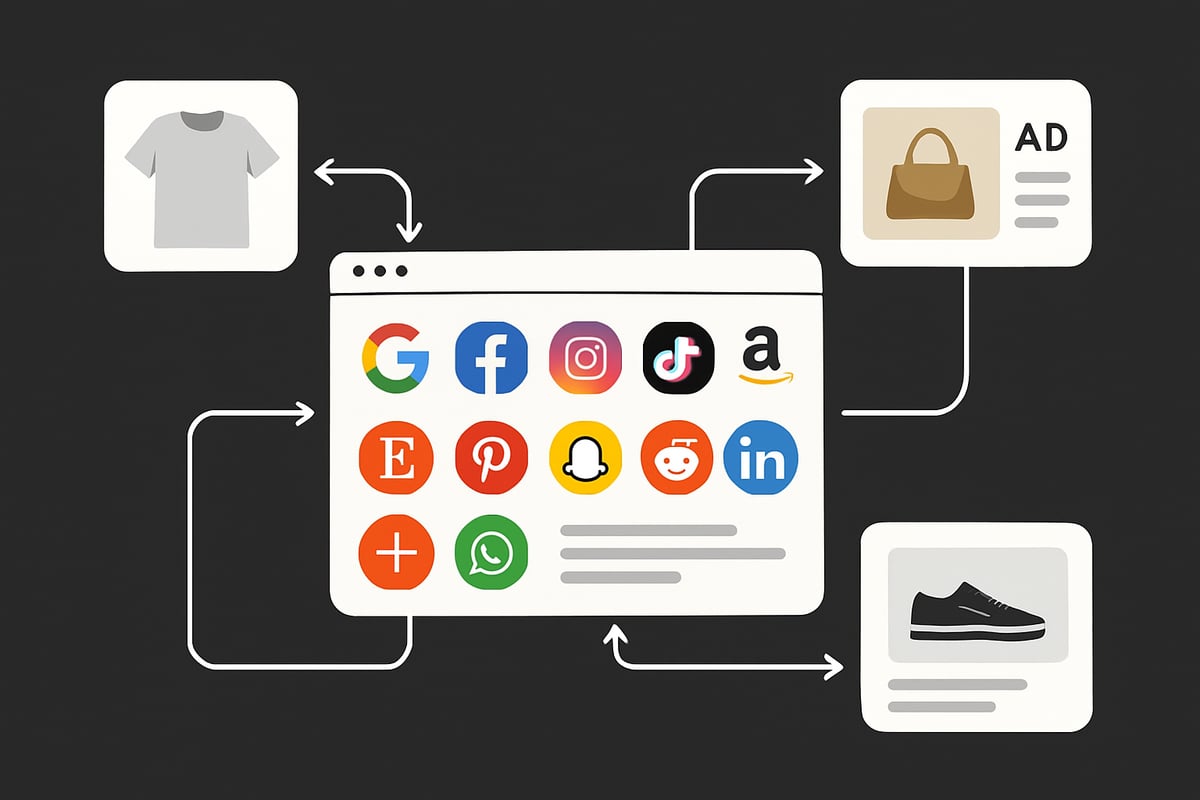
Paid search remains the backbone of e commerce advertising, allowing brands to target high-intent shoppers at the precise moment of need. Google Search and Shopping campaigns excel at driving conversions directly to product pages. Optimizing product feeds with accurate titles, rich images, and clear pricing is essential for strong performance.
Best practices include bidding on branded terms to protect your presence, using negative keyword lists to filter out irrelevant searches, and continuously refining your campaigns based on performance data. Bing offers a supplementary channel, often effective for reaching older or niche demographics with lower competition.
A well-structured Google Shopping campaign can significantly boost your e commerce advertising ROI by delivering visually appealing ads to users actively searching for products.
Paid Social Advertising: Facebook, Instagram, TikTok
Paid social channels are indispensable for e commerce advertising, offering robust targeting and creative flexibility. Facebook is ideal for both acquisition and retargeting, especially for products in the $30 to $150 range. Leveraging customer testimonials and social proof in ads can elevate engagement rates.
Instagram thrives on visual discovery, making it perfect for showcasing lifestyle and impulse-buy products. Carousel and story ad formats highlight multiple items or features in a single campaign. TikTok demands short, authentic, and trend-driven videos that resonate with younger audiences and inspire action.
Consider platform-specific creative strategies and audience insights to ensure your e commerce advertising stands out in crowded feeds and drives measurable results.
Marketplace Advertising: Amazon, Etsy, eBay
Marketplaces play a pivotal role in e commerce advertising, connecting brands with high-intent shoppers at scale. Amazon Ads are especially powerful for product launches and capturing users ready to buy. Sponsored listings and display ads on Etsy and eBay help increase product visibility, though these platforms often have stricter ad type limitations.
Success on marketplaces requires excellent product reviews and ratings, which directly impact ad performance and trust. Navigating platform restrictions and optimizing listings for each environment ensures your e commerce advertising dollars generate maximum impact.
Emerging Channels: Pinterest, Snapchat, WhatsApp, Reddit, LinkedIn
Emerging platforms provide new avenues for e commerce advertising, often reaching untapped audiences. Pinterest excels in visual discovery for lifestyle, home, and fashion products. Snapchat and WhatsApp facilitate direct communication with younger demographics, enabling personalized promotions and abandoned cart recovery.
Reddit and LinkedIn are valuable for niche targeting and B2B e commerce, allowing brands to engage specific communities or industries. For example, brands using WhatsApp for personalized offers report higher conversion rates and improved customer retention, illustrating the evolving landscape of e commerce advertising.
Channel Selection Framework
Choosing the optimal mix for e commerce advertising starts with understanding your audience’s preferred platforms. Analyze customer data, conduct focus groups, and review analytics to identify where your prospects spend time. Balance reach, cost, and targeting capabilities to maximize ROI.
Allocate budgets based on product type, customer lifetime value, and campaign objectives. Direct-to-consumer brands often prioritize Google and Facebook for broad impact, but integrating additional channels can unlock incremental growth. For a deeper dive into tailored strategies, explore Ecommerce advertising strategies to refine your approach.
A thoughtful selection process ensures your e commerce advertising efforts are both efficient and effective, positioning your brand for sustainable growth.
Data-Driven Audience Segmentation and Targeting
In 2025, e commerce advertising will rely heavily on precise data-driven segmentation and targeting. As privacy regulations evolve and platforms restrict third-party cookies, brands must adapt their strategies to reach customers more effectively. Leveraging the right data allows for more relevant ads, higher engagement, and improved ROI.
The Power of Zero- and First-Party Data
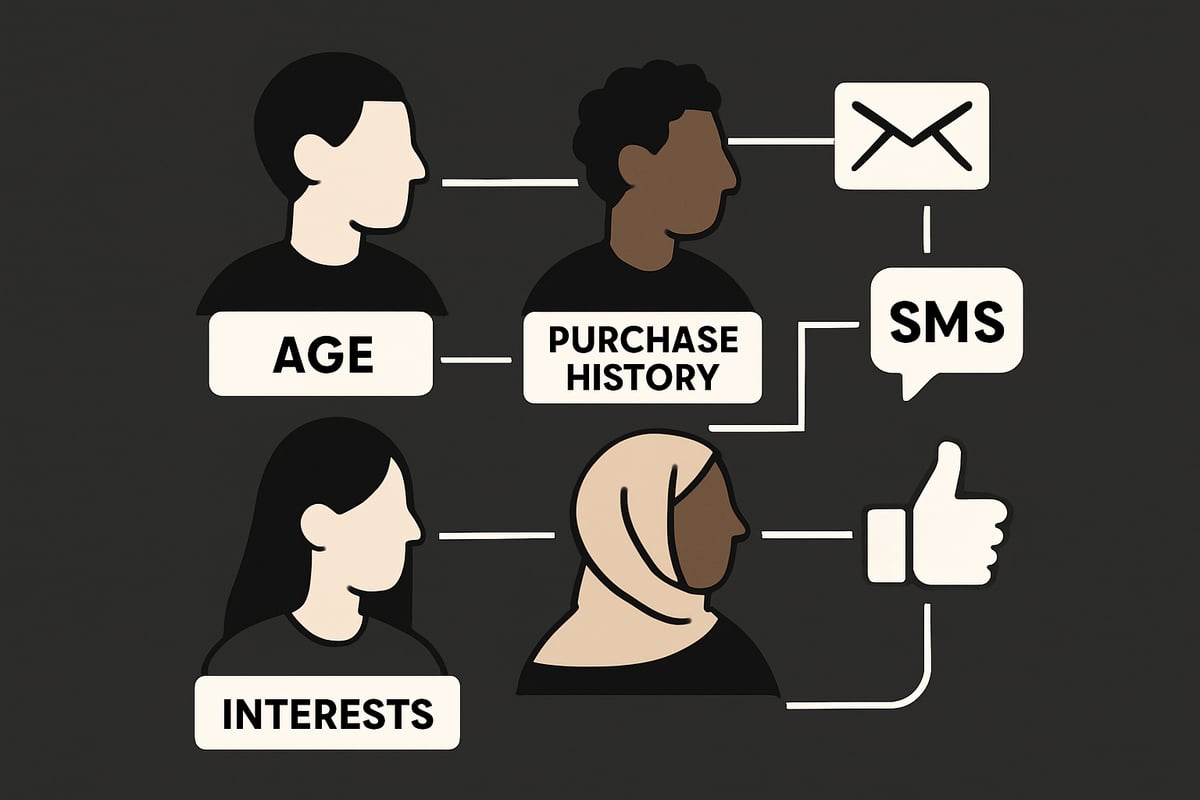
The foundation of effective e commerce advertising is zero- and first-party data. This data is collected directly from your customers through website interactions, purchases, email signups, and surveys. With third-party cookies fading, building robust email and SMS lists is now essential for owned audience segments.
Collecting and organizing this data lets you personalize campaigns based on real customer behaviors. For example, tracking purchase history and site actions enables tailored product recommendations and exclusive offers. Brands that prioritize data ownership are better equipped to adapt to ongoing privacy changes.
Audience Segmentation Strategies
To succeed in e commerce advertising, brands must go beyond simple demographics. Segment your audience using three main approaches:
- Demographic segmentation: Age, gender, location.
- Psychographic segmentation: Interests, values, lifestyle.
- Behavioral segmentation: Purchase history, browsing behavior, engagement level.
Lookalike audiences expand your reach by finding new shoppers who share traits with your best customers. For instance, a t-shirt brand might target both cat lovers and fashion enthusiasts to maximize niche campaign performance. Smart segmentation ensures your message resonates with every group.
Dynamic Retargeting and Remarketing
Retargeting is a core tactic in e commerce advertising for maximizing conversions. By targeting site visitors and cart abandoners with personalized ads, you can remind them of products they viewed or left behind. This approach works across digital channels, including display networks, email, and SMS.
Email and SMS retargeting nurture leads and recover lost sales by sending timely reminders or special incentives. According to E-commerce Advertising Strategies 2025, integrated retargeting campaigns can drive up to 9x return on ad spend. This highlights the value of cross-channel remarketing in your strategy.
Prospecting Campaigns for New Customer Acquisition
Expanding your reach with e commerce advertising requires effective prospecting campaigns. Use broad targeting options and interest-based segments to introduce your brand to new audiences. Creative assets should be tailored to address the specific interests and pain points of each group.
Multi-step funnels help nurture prospects, guiding them from awareness to purchase. For example, a brand might use an engaging video ad to capture attention, followed by a targeted offer for first-time buyers. Consistent messaging throughout the funnel increases the likelihood of conversion.
Leveraging AI and Automation for Segmentation
Artificial intelligence is transforming e commerce advertising by enabling predictive segmentation and real-time audience updates. AI-powered tools analyze vast amounts of data to identify high-value segments and trigger personalized ad delivery at the right moment.
Automation platforms can sync audience segments across multiple channels, ensuring a consistent experience. Automated lifecycle marketing triggers—such as birthday offers or re-engagement campaigns—help maintain customer interest and loyalty. Brands adopting AI and automation gain a competitive edge in campaign performance.
Measuring and Refining Audience Segments
Continuous measurement is crucial for optimizing e commerce advertising. Track segment-level performance using analytics dashboards to identify which groups drive the most sales. Adjust bids and creative elements based on real-time data to maximize efficiency.
A/B testing audience definitions helps refine targeting, while attribution models reveal each segment's contribution to your overall sales. Regular analysis ensures your segmentation strategy evolves with changing consumer behaviors and market trends.
Creative Strategies and Ad Formats That Convert
Creating standout campaigns in e commerce advertising requires more than just great products. The right mix of creativity, personalization, and platform-specific tactics can transform casual browsers into loyal customers. Let’s break down the essential creative strategies and ad formats that drive results in 2025.

Crafting Compelling Ad Copy and Visuals
Effective e commerce advertising starts with storytelling. Brands that use emotion and narrative in their ad copy connect more deeply with audiences. High-quality images, polished product videos, and authentic user-generated content (UGC) all boost trust and engagement.
Consider using a mix of:
- Customer testimonials
- Before and after photos
- Lifestyle imagery
For example, testimonial ads often outperform standard product ads on Facebook by making the value proposition relatable. Strong visuals paired with concise copy help drive higher click-through and conversion rates.
Platform-Specific Creative Best Practices
Every platform in e commerce advertising has its own creative language. On Facebook, longer-form copy and social proof work well, while Instagram thrives on bold visuals and carousel or story formats. TikTok demands short, trend-driven videos that feel spontaneous.
A quick comparison:
| Platform | Creative Focus | Format Examples |
|---|---|---|
| Trust, testimonials | Feed, Stories | |
| Visuals, lifestyle | Carousels, Reels | |
| TikTok | Authentic, fast-paced | Short-form video |
| Clarity, value props | Shopping, Search Ads |
Matching your creative to the platform’s strengths ensures your e commerce advertising efforts resonate with users.
Personalization and Dynamic Content
Personalization is now expected in e commerce advertising. Dynamic product ads use browsing or purchase history to show the right product to the right shopper at the right time. Personalized offers and tailored messaging by segment increase relevance and drive higher conversion rates.
For instance, Google Shopping ads can automatically display relevant products for each user based on their recent activity. This approach ensures that audiences see content that matches their interests and needs, making each interaction feel unique.
Video and Interactive Ad Formats
Video is a dominant force in e commerce advertising. Short videos on platforms like Instagram Reels and TikTok capture attention quickly and spark product discovery. Interactive formats, such as polls, quizzes, and shoppable posts, invite users to engage directly with your brand.
Some high-performing formats include:
- TikTok challenges
- Instagram polls in Stories
- Shoppable video posts
Brands using interactive and video formats often see increased product discovery and longer engagement times.
Creative Testing and Optimization
Continuous testing is a cornerstone of successful e commerce advertising. A/B test images, copy, and calls-to-action to identify what truly resonates. Use performance data to iterate quickly and scale creative assets that deliver results.
For a step-by-step approach to scaling winning strategies, refer to this growth marketing strategy guide. Brands that run multivariate tests often uncover surprising insights that refine their ad messaging and boost ROI.
Ensuring Brand Consistency Across Channels
Maintaining a unified brand voice is critical in e commerce advertising, even as you adapt creative to each platform. Consistent visuals, messaging, and tone build trust and make your brand instantly recognizable.
Coordinate campaigns across Facebook, Instagram, and Google to tell a cohesive story. Adjust creative elements for each channel’s norms, but always reinforce your brand’s core identity. This approach strengthens recall and fosters customer loyalty.
Advanced Optimization and Measurement Techniques
In a rapidly evolving landscape, mastering advanced optimization and measurement is crucial for e commerce advertising success. Brands that embrace precise tracking, data-driven decision-making, and innovative tools will outperform competitors and achieve sustainable growth.
Conversion Tracking and Attribution Models
Effective e commerce advertising begins with robust conversion tracking and clear attribution models. Setting up pixel tracking and server-side measurement ensures every action is captured accurately.
Choose between first-click, last-click, or multi-touch attribution to understand how each channel contributes to conversions. Multi-touch attribution gives a holistic view of the customer journey, helping marketers allocate spend wisely.
For a deeper dive into analyzing advertising performance, see this guide on Advertising analysis for ecommerce. By consistently reviewing attribution data, brands can refine their approach and maximize e commerce advertising ROI.
Budget Allocation and Bid Strategies
Smart budget allocation is vital for scaling e commerce advertising efforts. Dynamic budget distribution lets you shift spend to top-performing channels in real time, ensuring resources are used efficiently.
Leverage automated bidding strategies like target ROAS or CPA to optimize for your most important goals. These tools adjust bids based on real-time data, freeing up time for strategic planning.
Compare results regularly, balancing prospecting and retargeting investments. By adapting spend to campaign performance, e commerce advertising budgets deliver the highest possible returns with minimal waste.
Landing Page and Website Optimization
Optimizing landing pages is essential for converting e commerce advertising traffic into sales. Ensure a seamless connection between ad creative and landing page content to boost Quality Scores and relevance.
Prioritize fast-loading, mobile-friendly designs to reduce bounce rates. Clear calls-to-action and minimal distractions keep visitors focused on conversion.
Regularly test elements like headlines, images, and forms. When e commerce advertising drives users to optimized landing pages, conversion rates climb and customer satisfaction improves.
Leveraging AI-Powered Analytics for Insights
AI-powered analytics are transforming e commerce advertising measurement. These tools predict trends, identify high-value segments, and uncover optimization opportunities automatically.
Set up dashboards for real-time reporting and anomaly detection. With AI, you can spot performance shifts quickly and respond before campaigns go off track.
Automated insights help marketers focus on strategy rather than manual data crunching. Brands leveraging AI in e commerce advertising consistently outperform those relying on intuition alone.
Scaling Campaigns with Automation
Automation is the backbone of modern e commerce advertising. Use rules-based systems to pause, scale, or reallocate budgets instantly based on performance triggers.
Automated creative rotation keeps ads fresh, while audience refresh ensures targeting remains relevant as customer behaviors shift. Platforms like Klaviyo help manage these processes across multiple channels.
By automating routine tasks, marketers can focus on creative strategy and growth. This approach allows e commerce advertising to scale efficiently without sacrificing quality or oversight.
Staying Ahead of Industry Changes
The e commerce advertising landscape is constantly shifting due to algorithm updates and evolving privacy regulations. Stay informed about changes on major platforms to maintain a competitive edge.
Adopt new ad formats and policies quickly to take advantage of fresh opportunities. As third-party cookies phase out, prioritize zero- and first-party data for targeting and measurement.
Proactive adjustments ensure e commerce advertising strategies remain effective as the industry evolves. Brands that anticipate change and adapt rapidly are best positioned for long-term success.
Future Trends and Innovations in E-Commerce Advertising
The future of e commerce advertising is rapidly unfolding, bringing both new opportunities and fresh challenges for brands. As technology evolves and consumer expectations shift, staying ahead requires agility and insight. Forward-thinking businesses are already embracing these transformative trends to maximize their competitive edge.
AI and Machine Learning Revolution
Artificial intelligence is revolutionizing e commerce advertising by enabling hyper-personalization and smarter targeting. Brands use AI to analyze vast data sets, predict shopper behavior, and automate campaign optimization in real time. This leads to more relevant ads and improved ROI. For a deeper dive into how AI is reshaping the industry, explore AI and ecommerce trends.
Conversational Commerce Takes Off
Conversational platforms such as WhatsApp, Messenger, and live chat are transforming how brands connect with shoppers. E commerce advertising now includes personalized outreach through automated chatbots, instant product recommendations, and direct customer support. These tools make shopping more interactive and help brands nurture leads with real-time engagement.
Social Commerce and In-App Shopping
Social platforms are blurring the line between discovery and purchase. Instagram and TikTok increasingly offer seamless in-app checkout, making social commerce a core part of e commerce advertising. Shoppable posts, influencer collaborations, and video reviews drive conversions by meeting customers where they spend the most time.
Voice Search and Smart Device Ads
Voice assistants like Alexa and Google Assistant are changing search behavior. E commerce advertising strategies now optimize for spoken queries and leverage voice-activated ads. Smart devices also enable contextual targeting, allowing brands to reach consumers at home, on the go, or in connected vehicles.
Sustainability and Ethical Advertising
Consumers are demanding more from brands, pushing for transparency, sustainability, and ethical practices in e commerce advertising. Campaigns that highlight eco-friendly products, ethical sourcing, or charitable initiatives build trust and loyalty. Brands that align with these values can differentiate themselves in a crowded market.
Privacy, Data Ownership, and Regulation
Stricter privacy laws and evolving data ownership norms are reshaping e commerce advertising. Cookie deprecation and platform privacy updates mean brands must rely on zero- and first-party data. Businesses that prioritize consent, transparency, and secure data handling will be better positioned to adapt and thrive.
AR, VR, and Immersive Ad Experiences
Augmented and virtual reality are unlocking new creative possibilities in e commerce advertising. Shoppers can now visualize products in their space before buying, try on virtual apparel, or interact with 3D models. For more insights on this growing trend, review Augmented Reality in E-commerce.
| Trend | Impact on E Commerce Advertising |
|---|---|
| AI/ML | Hyper-personalization, predictive targeting |
| Conversational Commerce | Real-time engagement, higher conversions |
| Social Commerce | Seamless in-app purchases, influencer power |
| Voice & Smart Devices | New ad formats, contextual targeting |
| Sustainability | Builds trust, attracts conscious shoppers |
| Privacy/Data | Shifts to owned data, higher compliance |
| AR/VR | Immersive, interactive shopping |
Key Takeaway: Adaptability Wins
The future of e commerce advertising belongs to brands that embrace change, experiment with emerging technologies, and put the customer at the center of every campaign. By adopting these trends early, businesses can stand out, drive growth, and build lasting relationships in an ever-evolving digital landscape.
