

Did you know that over 75 percent of online retailers use data analytics to better understand how customers shop? Market Basket Analysis can uncover shopping patterns that lead to smarter promotions and boost revenue. For any business wanting to improve product recommendations or streamline store layouts, these insights make every transaction more valuable. With the right approach, even small shifts in product pairing can drive noticeable growth.
Table of Contents
Key Takeaways
| Point | Details |
| Market Basket Analysis (MBA) | MBA uncovers purchasing patterns to enable targeted marketing strategies and improve operational efficiency. |
| Cross-Selling and Product Placement | Insights from MBA can enhance cross-selling strategies and optimize product placement both online and in physical stores. |
| ApusNest vs Dataiku | ApusNest focuses on e-commerce integration and user-friendly features, while Dataiku offers advanced machine learning capabilities for more complex analytics. |
| Selection Criteria for Tools | Businesses should prioritize omnichannel integration, usability, and scalability when choosing a market basket analysis platform. |
Market Basket Analysis: Core Concepts and Benefits
Market Basket Analysis (MBA) is a powerful data mining technique that reveals hidden connections between products purchased together. According to arXiv, this approach enables businesses to develop targeted marketing strategies and enhance operational efficiency by uncovering intricate purchasing patterns.
How Market Basket Analysis Works
At its core, MBA examines transactional data to identify statistically significant relationships between products. Think of it like detective work for sales data. The technique uses sophisticated algorithms to detect which items are frequently bought in the same transaction, revealing unexpected connections that might not be immediately obvious.
Key benefits of Market Basket Analysis include:
-
Improved Cross-Selling Strategies: Identify products that customers tend to purchase together
-
Enhanced Product Placement: Optimize store layouts and online product recommendations
-
Personalized Marketing: Create targeted promotional campaigns based on purchasing patterns
-
Increased Average Order Value: Design bundled offerings that encourage larger purchases
Businesses can leverage MBA insights across multiple domains. Retailers can strategically position complementary products, e-commerce platforms can design more intelligent recommendation engines, and marketing teams can craft precision campaigns that resonate with specific customer segments. Basket Analysis Guide from ApusNest provides deeper insights into implementing these strategies effectively.
ApusNest Solution: Features for E-Commerce Stores
ApusNest offers a comprehensive Market Basket Analytics platform designed specifically for e-commerce stores, providing powerful insights that transform raw transaction data into strategic business intelligence. ApusNest’s Market Basket Analytics integrates omnichannel data, allowing businesses to analyze online and offline transactions, CRM information, and loyalty program interactions for a truly unified view of customer activity.
Key Platform Capabilities
The solution goes beyond traditional analytics by offering unique features tailored for e-commerce entrepreneurs. Merchants can leverage advanced algorithms to uncover hidden product relationships, understand purchasing patterns, and develop targeted marketing strategies that directly impact revenue. These insights help businesses design more intelligent product recommendations, optimize inventory management, and create personalized cross-selling opportunities.
Unique features of the ApusNest solution include:
Here’s a comparison of the key features of ApusNest and Dataiku market basket analytics platforms:
| Feature | ApusNest | Dataiku |
| Data Integration | Omnichannel Online & Offline |
Flexible Multiple Sources |
| Analytics Approach | MBA-Focused Business Insights |
Advanced ML Predictive Models |
| Privacy & Security | Anonymized GDPR/CCPA Compliant |
Enterprise Security Tools |
| Real-Time Capabilities | Yes | Yes |
| Collaboration Tools | Basic Sharing | Collaborative Workspace |
| Customizable Reporting | Flexible Dashboards | Custom Reports & Visualizations |
| Ease of Use | Designed for merchants | Intuitive, No-code Options |
| Pricing | Tailored Small/Medium Focus |
Scalable Enterprise Options |
-
Omnichannel Data Integration: Seamlessly combine data from multiple sales channels
-
Privacy-First Analytics: Anonymized transaction processing
-
Real-Time Insights: Instant analysis of purchasing trends
-
Customizable Reporting: Flexible dashboards for different business needs
Standing out from competitors, ApusNest emphasizes data ethics and security. Understanding Ecommerce Analytics highlights their commitment to compliance, ensuring all analytics adhere to regulations like GDPR and CCPA by anonymizing transaction data and implementing strict access controls. This approach not only protects customer information but also builds trust with increasingly privacy-conscious consumers.

Dataiku Platform: Advanced Analytics Capabilities
Dataiku offers a robust collaborative data science platform specifically designed to empower e-commerce businesses with advanced analytics solutions. Their platform enables companies to transform complex data into actionable insights through an intuitive interface that simplifies sophisticated market basket analysis and predictive modeling processes.
Platform Core Capabilities
At the heart of Dataiku’s offering is a comprehensive suite of tools that support end-to-end data analysis. According to their product documentation, the platform supports integration with multiple data sources, providing merchants with flexible tools for data preparation, machine learning, and visualization. This means e-commerce teams can seamlessly connect various data streams, from transaction logs to customer behavioral data, creating a holistic view of purchasing patterns.
Key features of the Dataiku analytics platform include:
-
Collaborative Workspace: Multiple team members can work simultaneously on data projects
-
Advanced Machine Learning: Built-in algorithms for predictive analysis
-
Flexible Data Integration: Connects with multiple e-commerce and CRM platforms
-
Automated Insights Generation: Rapid identification of complex purchasing trends
For businesses seeking deeper analytical capabilities, Customer Insights Analytics Guide suggests that platforms like Dataiku represent the next generation of e-commerce intelligence. By combining sophisticated machine learning techniques with user-friendly interfaces, Dataiku democratizes advanced analytics, allowing even smaller teams to leverage enterprise-grade insights without requiring extensive data science expertise.
Integration and Usability for Online Retailers
Integration capabilities are critical for modern e-commerce analytics platforms, determining how seamlessly businesses can connect their existing technologies and extract meaningful insights. Dataiku’s platform offers robust integration tools that enable online retailers to merge multiple data sources, creating a comprehensive view of customer behavior and purchasing patterns.
Data Connectivity Strategies
According to ApusNest’s Market Basket Analytics, successful e-commerce platforms must provide omnichannel data integration, allowing businesses to analyze online and offline transactions, CRM information, and loyalty program data simultaneously. This holistic approach transforms fragmented data into a unified customer activity narrative, enabling more sophisticated market basket analysis and strategic decision-making.
Key integration considerations for online retailers include:
-
Seamless Platform Connections: Easy integration with existing e-commerce systems
-
Real-Time Data Synchronization: Instant updates across multiple channels
-
Flexible Data Source Support: Compatibility with various transaction and customer databases
-
Automated Data Mapping: Intelligent recognition of data structures and relationships
AI and Ecommerce Guide suggests that the most effective analytics platforms go beyond simple data collection, offering intelligent interpretation and actionable recommendations. By prioritizing user-friendly interfaces and comprehensive integration capabilities, these tools democratize advanced analytics, allowing even smaller online retailers to leverage enterprise-grade insights without requiring extensive technical expertise.
Comparing Pricing, Reports, and Export Options
Market basket analysis platforms must balance sophisticated capabilities with accessible pricing and flexible reporting. Dataiku offers a comprehensive approach, providing flexible pricing plans tailored to different business sizes and analytical requirements, ensuring that e-commerce merchants can find a solution matching their specific needs and budget constraints.
Reporting and Insight Delivery
According to ApusNest’s Market Basket Analytics, effective analytics platforms must deliver customizable export options that enable businesses to transform raw data into actionable strategic insights. Both platforms recognize that the true value lies not just in data collection, but in how easily merchants can extract, understand, and implement those insights across their operations.
Key comparative aspects include:
-
Pricing Flexibility: Scalable plans for different business sizes
-
Report Customization: Ability to tailor analytics outputs
-
Export Capabilities: Formats and destinations for generated insights
-
Data Ownership: Transparency in how data can be used and transferred
Sales Analysis Report highlights that modern e-commerce analytics tools must go beyond basic reporting, offering intelligent, context-rich insights that can directly inform business strategy. By prioritizing user-friendly export mechanisms and transparent pricing models, these platforms empower online retailers to make data-driven decisions without prohibitive technical barriers or unexpected costs.

Selecting the Best Tool for Your Business
Choosing the right market basket analysis platform requires a strategic evaluation of your e-commerce business’s unique requirements and growth trajectory. Dataiku’s platform offers comprehensive tools that support integration with various data sources, providing sophisticated data preparation, machine learning, and visualization capabilities designed to meet diverse analytical needs.
Critical Selection Criteria
According to ApusNest’s Market Basket Analytics, businesses should prioritize platforms that offer omnichannel data integration, enabling seamless analysis of online and offline transactions, CRM data, and loyalty program insights. This holistic approach transforms fragmented information into a unified view of customer behavior, empowering more intelligent strategic decision-making.
Key considerations when selecting a market basket analysis tool include:
-
Data Integration Depth: Ability to connect multiple sales channels
-
Analytical Complexity: Advanced machine learning capabilities
-
Usability: Intuitive interface for non-technical users
-
Scalability: Flexible pricing and feature sets
-
Customization: Tailored reporting and export options
Marketing Tools and Strategies Guide emphasizes that the most effective analytics solutions go beyond raw data processing, offering intelligent insights that directly translate into actionable business strategies. By carefully evaluating these factors, e-commerce entrepreneurs can select a platform that not only meets their current analytical needs but also supports future growth and innovation.
Unlock Hidden Revenue with Advanced Market Basket Analysis
Understanding complex product relationships can feel overwhelming especially when trying to increase your average order value. This article highlights the challenges of integrating omnichannel data and leveraging sophisticated market basket analytics to uncover customer buying patterns. You want clear actionable insights to power cross-selling, optimize product placement, and design targeted marketing campaigns that drive real growth.
That is exactly where APUS NEST excels. Our AI-powered SaaS platform is designed for Shopify and WooCommerce store owners looking to dive deep into sales data with ease. Experience how effortless it is to upload your sales data, analyze product pairings, and receive detailed reports that uncover hidden revenue opportunities. With no subscriptions required and full control over your data, APUS NEST empowers you to make smart cross-sell decisions now and scale faster.
Are you ready to transform your e-commerce store’s performance through intelligent market basket analysis
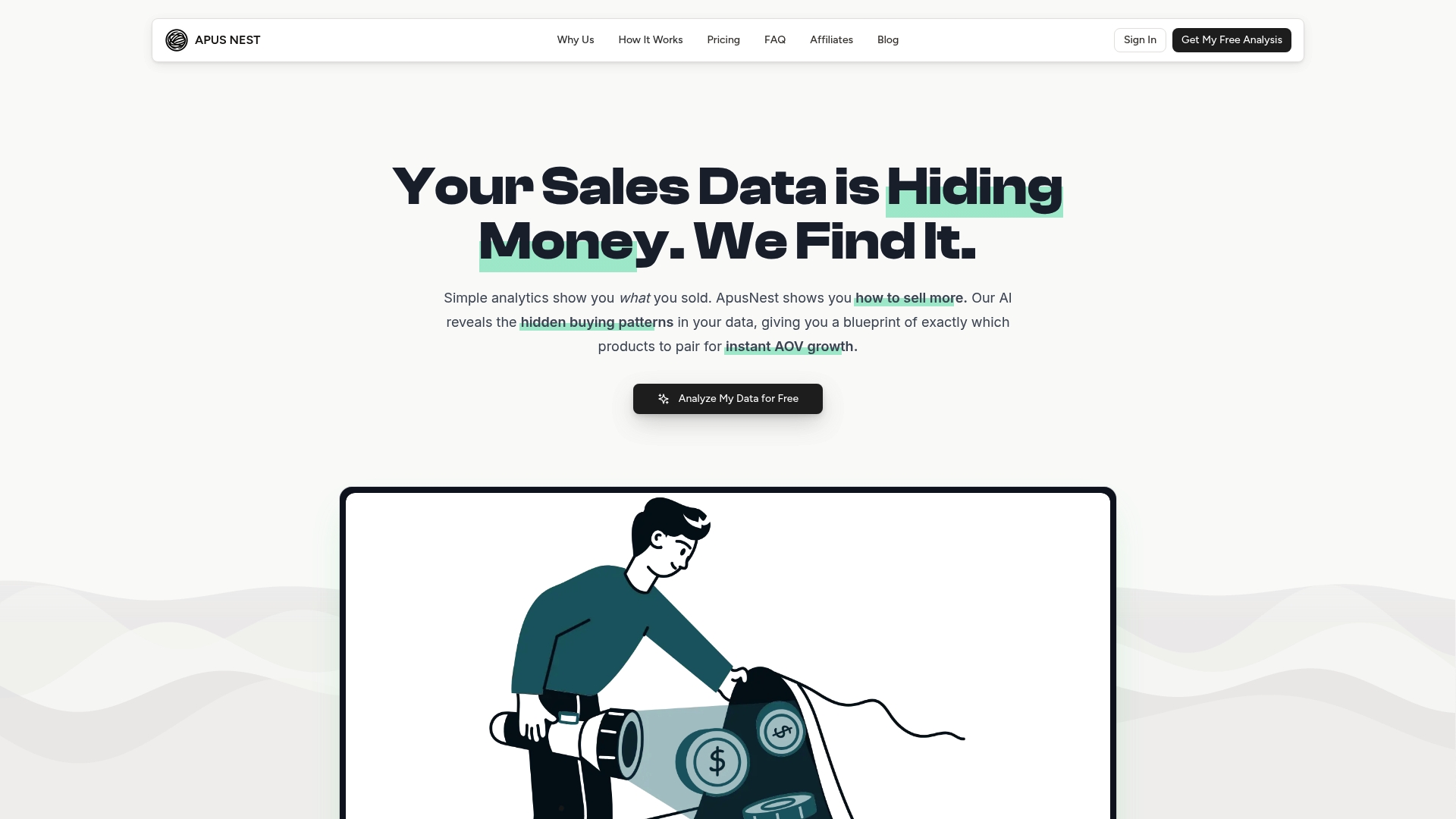
Discover how you can boost your business today with APUS NEST’s proven insights and user-friendly tools. Visit the APUS NEST homepage to get your free report and start unlocking growth opportunities. Explore our detailed Market Basket Analytics overview and learn how to maximize your revenue with smart data strategies in our Marketing Tools and Strategies Guide. Take the first step toward increased sales and a more profitable online store today.
Frequently Asked Questions
What is Market Basket Analysis (MBA)?
Market Basket Analysis (MBA) is a data mining technique used to uncover patterns in transaction data, revealing relationships between products that are commonly purchased together.
How do ApusNest and Dataiku differ in their approach to Market Basket Analysis?
ApusNest focuses on omnichannel data integration and user-friendly features tailored for e-commerce entrepreneurs, whereas Dataiku emphasizes advanced machine learning capabilities and collaboration tools for complex data analysis.
What key features should I look for in a Market Basket Analysis platform?
When selecting a platform, consider features such as data integration capabilities, user-friendliness, customizable reporting options, real-time insights, and privacy and security compliance.
How does MBA improve marketing strategies for e-commerce businesses?
MBA enhances cross-selling strategies, optimizes product placement, enables personalized marketing, and ultimately increases the average order value by identifying and leveraging purchasing patterns.
